October 8, 2011
Today, we traveled by van from La Paz to Huatajata. Danny, Margaret, Ernie and I were picked up by Juan Antonio (our guide) from Crillon Tours (http://www.titicaca.com/English/ingIndex.html)
at 6:30 am. As we traveled along in our comfortable van, we climbed high to the Altiplano to 14,000 feet before our terrain leveled out. There was fresh snow on all the high peaks when we arrived at the top. It is supposed to be Spring in Bolivia; however, the snow keeps falling! We could not see the tip of Illimani (6,400 meters) which was covered in clouds, but what we could see was beautiful.
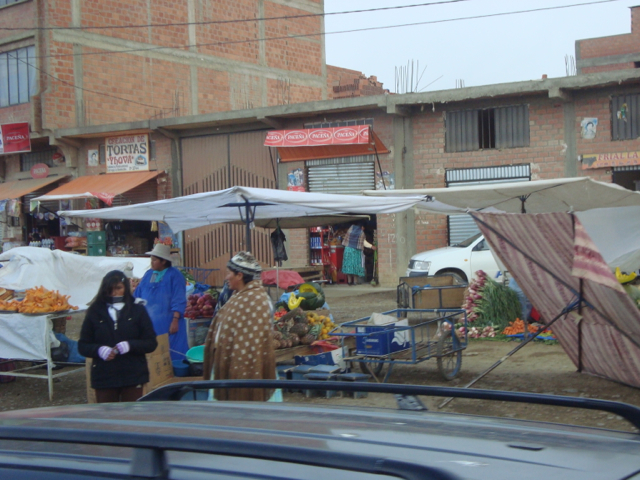
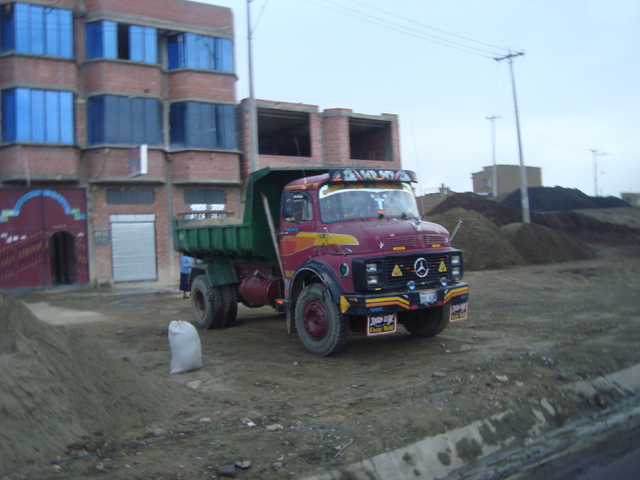
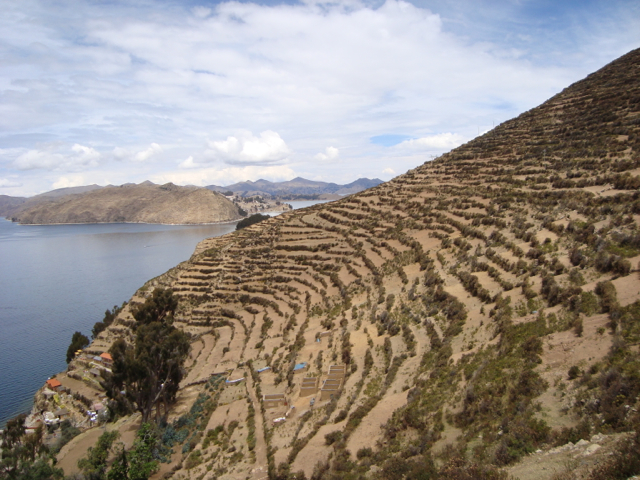
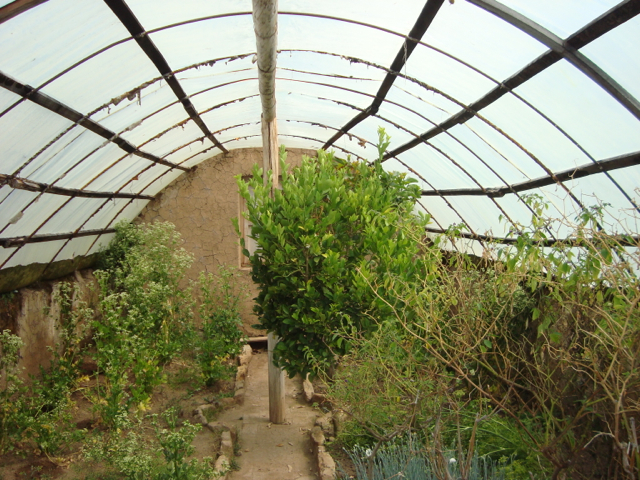
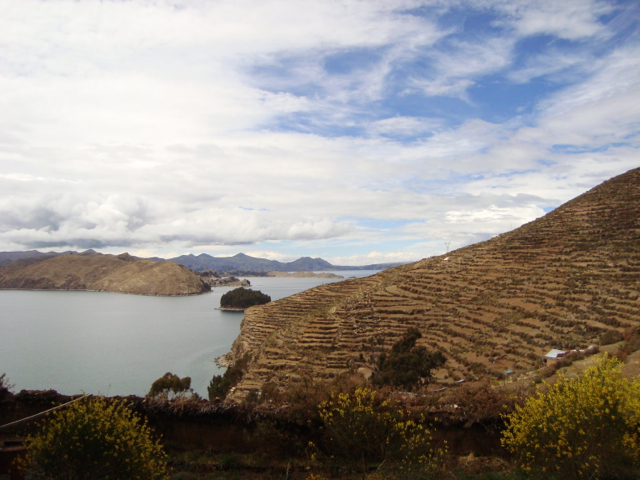
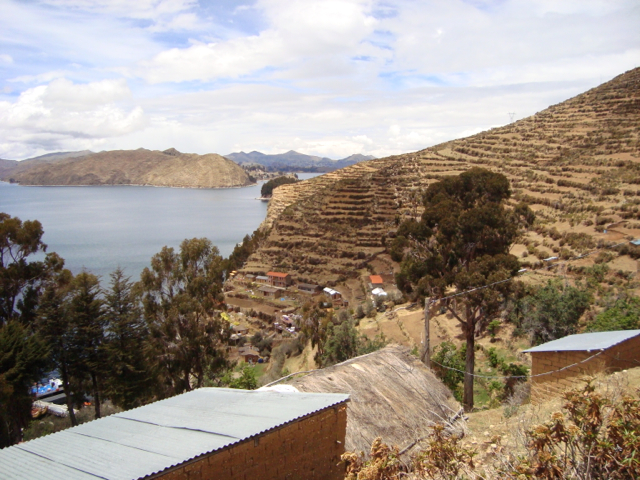
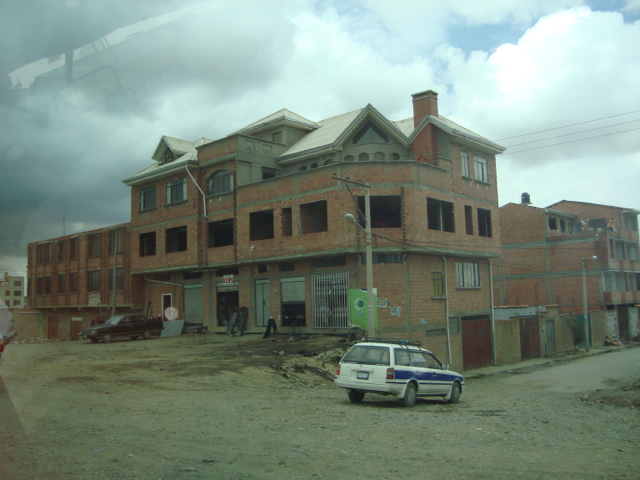
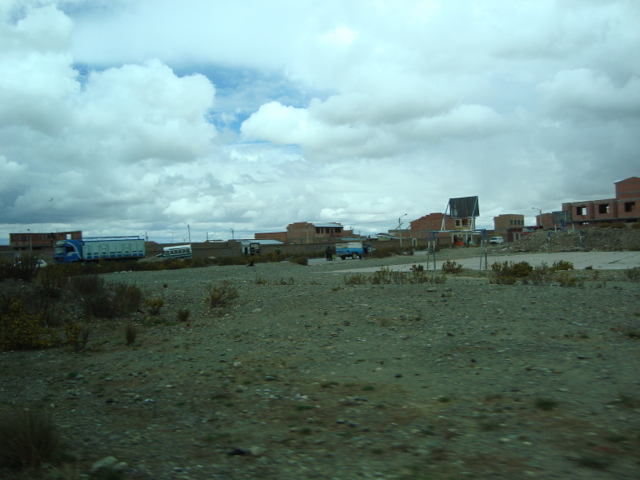
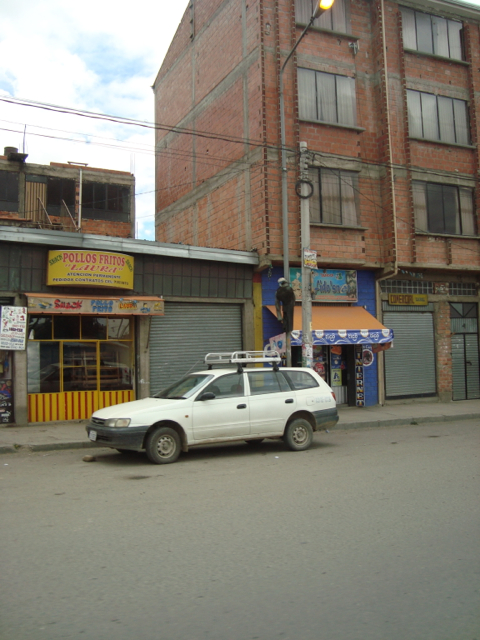
As we traveled through the outskirts of the Altiplano, the homes and community extended for many miles. Many rural families, especially from Lake Titicaca, come into the outskirts of Altiplano to build extended family homes. They raise enough money to begin the building process, reach a certain point where they run out of money, go back to the fields to work and then come back to continue the building process when money is available. It wasn’t until we started approaching the Lake that we saw vegetation again; the terrain was very sparse for a while. Lake Titicaca provides a unique microclimate that allows vegetation and terraced fields to prosper at high altitude. We’ve never seen such lush vegetation at this high altitude!
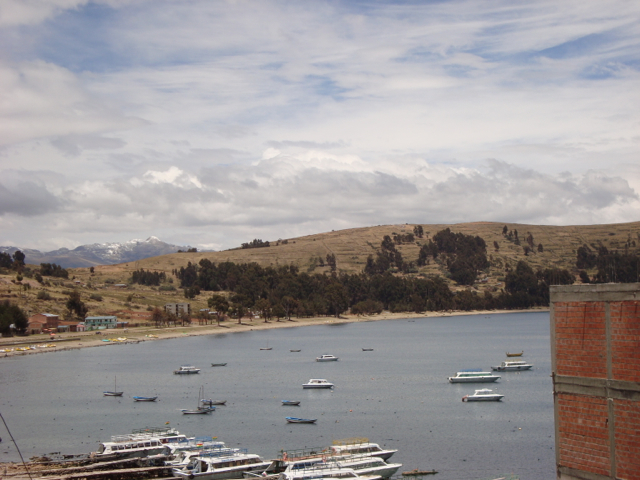
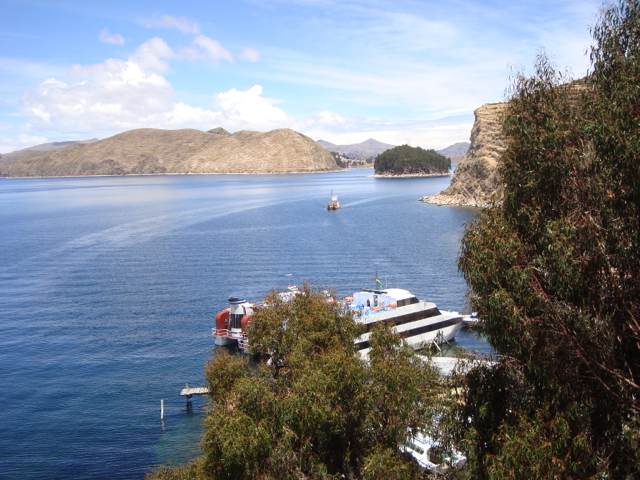
Consumed a quick, delicious cup of coffee and and a tiny break on the shores of Lake Titicaca at the small village of Huatajata and then were whisked away on the hydrofoil onto Lake Titicaca–the highest navigable lake in the world and the highest lake in all of South America. The Lake is shared by Peru and Bolivia. In this lake you will find the giant Lake Titicaca frogs, which have transparent armpits (see website below), and lots of trout—salmon trout and rainbow trout.
http://www.nwf.org/News-and-Magazines/National-Wildlife/Animals/Archives/2003/In-the-Land-of-Giant-Frogs.aspx
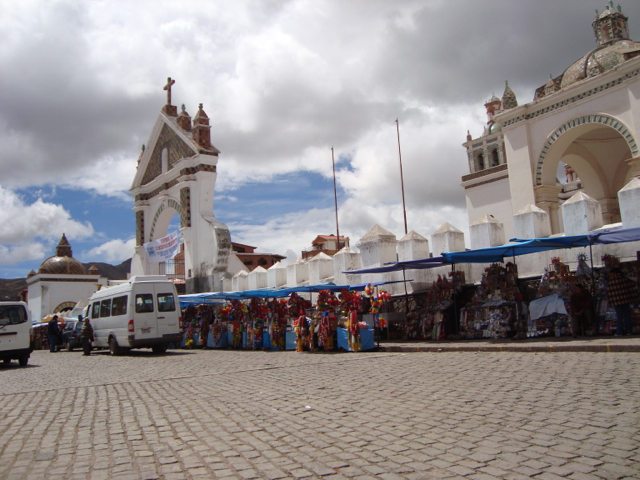
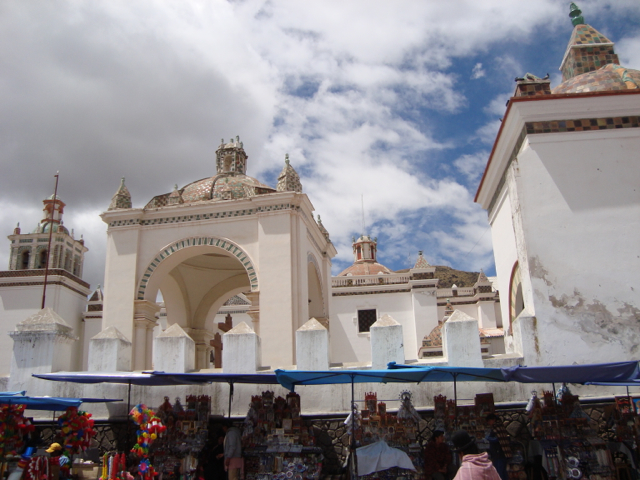
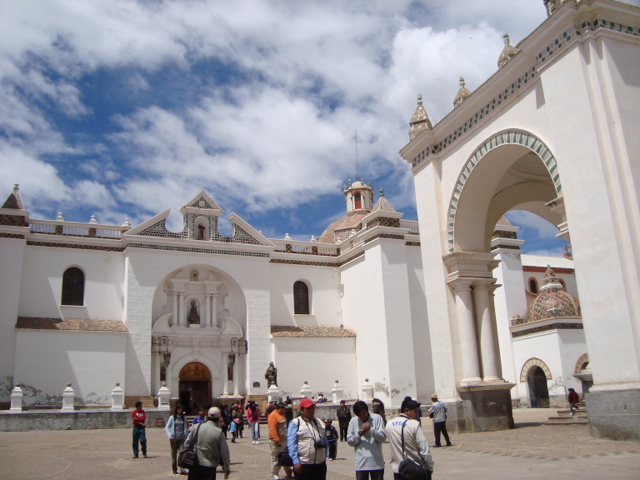
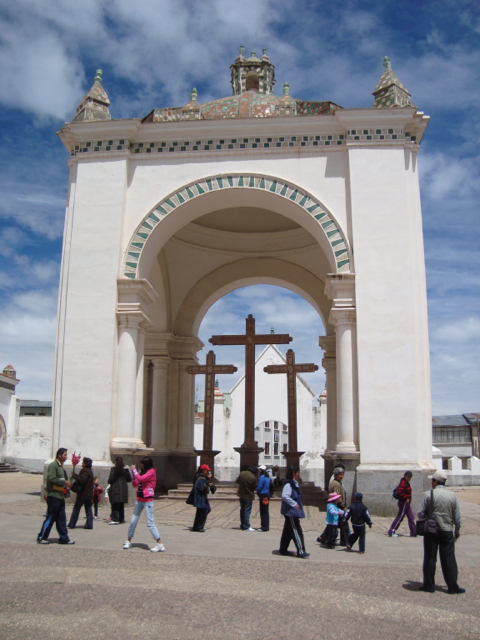
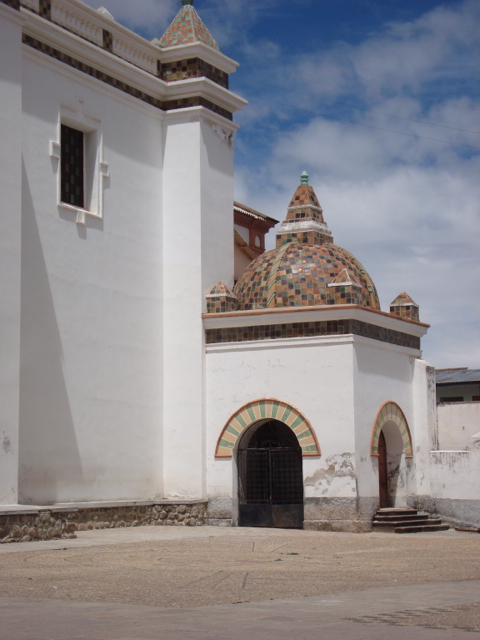
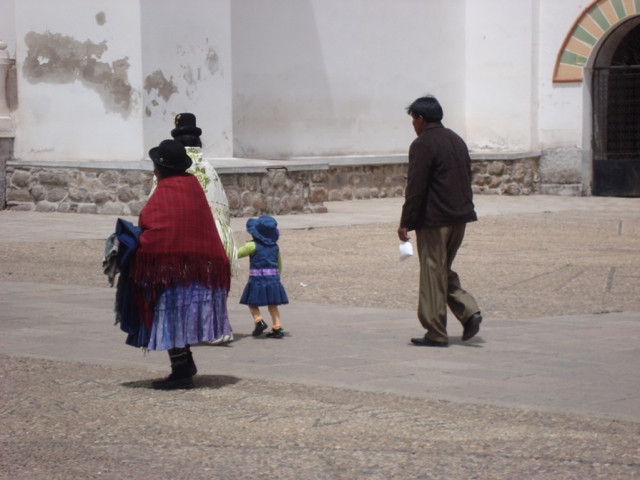
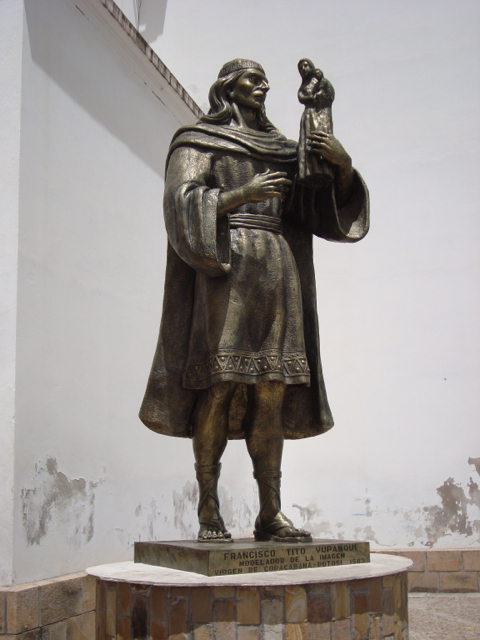
Afterwards we climbed aboard our hydrofoil and sped off to Copacabana at 27 knots per hour, where we visited the Basilica of Our Lady of Copacabana. Copacabana–WOW! The little fishing village was amazingly beautiful and very “Kathmanduesque”. The only thing missing was the incense and Buddhist monks. The Copacabana cathedral grounds were absolutely stunning in crisp, white Moorish style. El sol is extremely intense here, so Ernie found a Johnny Cash felt hat and I purchased a packable, crushable straw sun hat– we’re now set for the weekend protected from the intense rays.
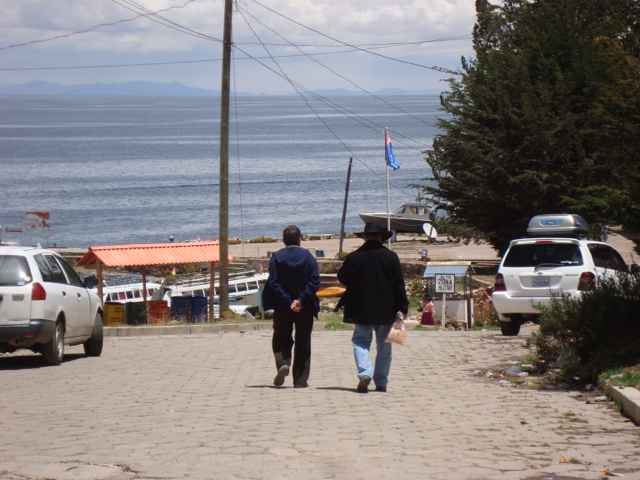
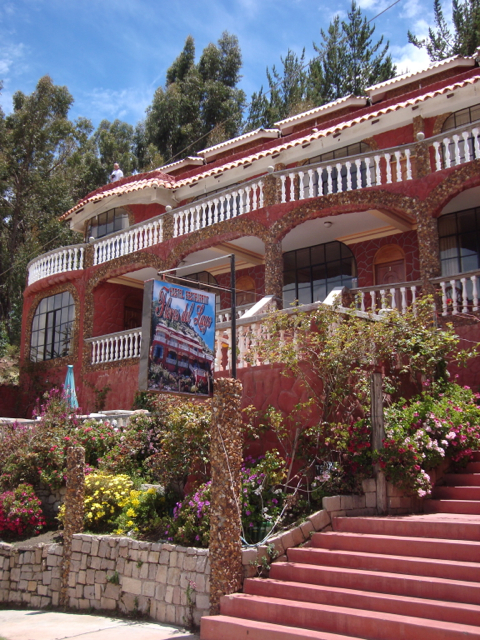
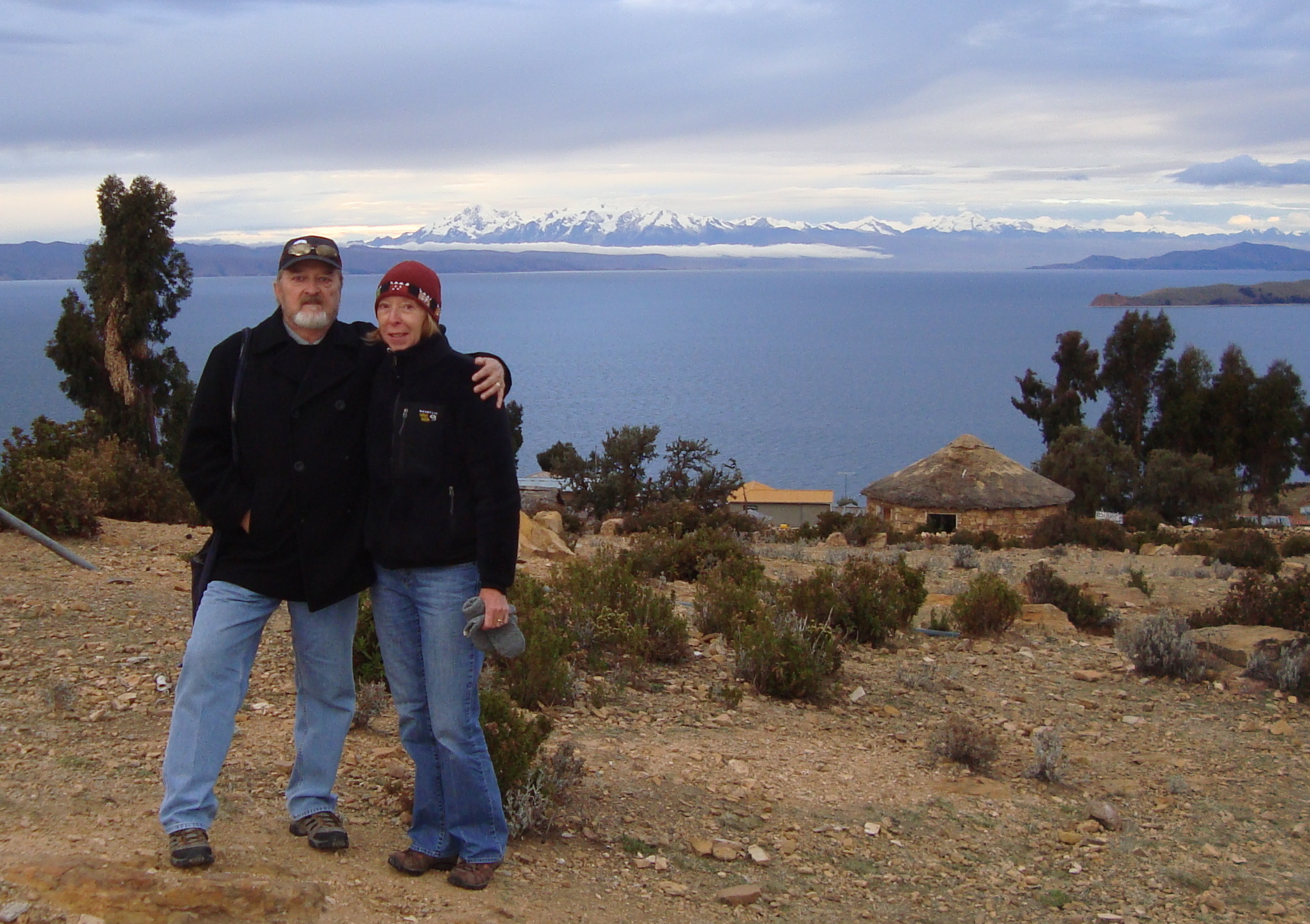
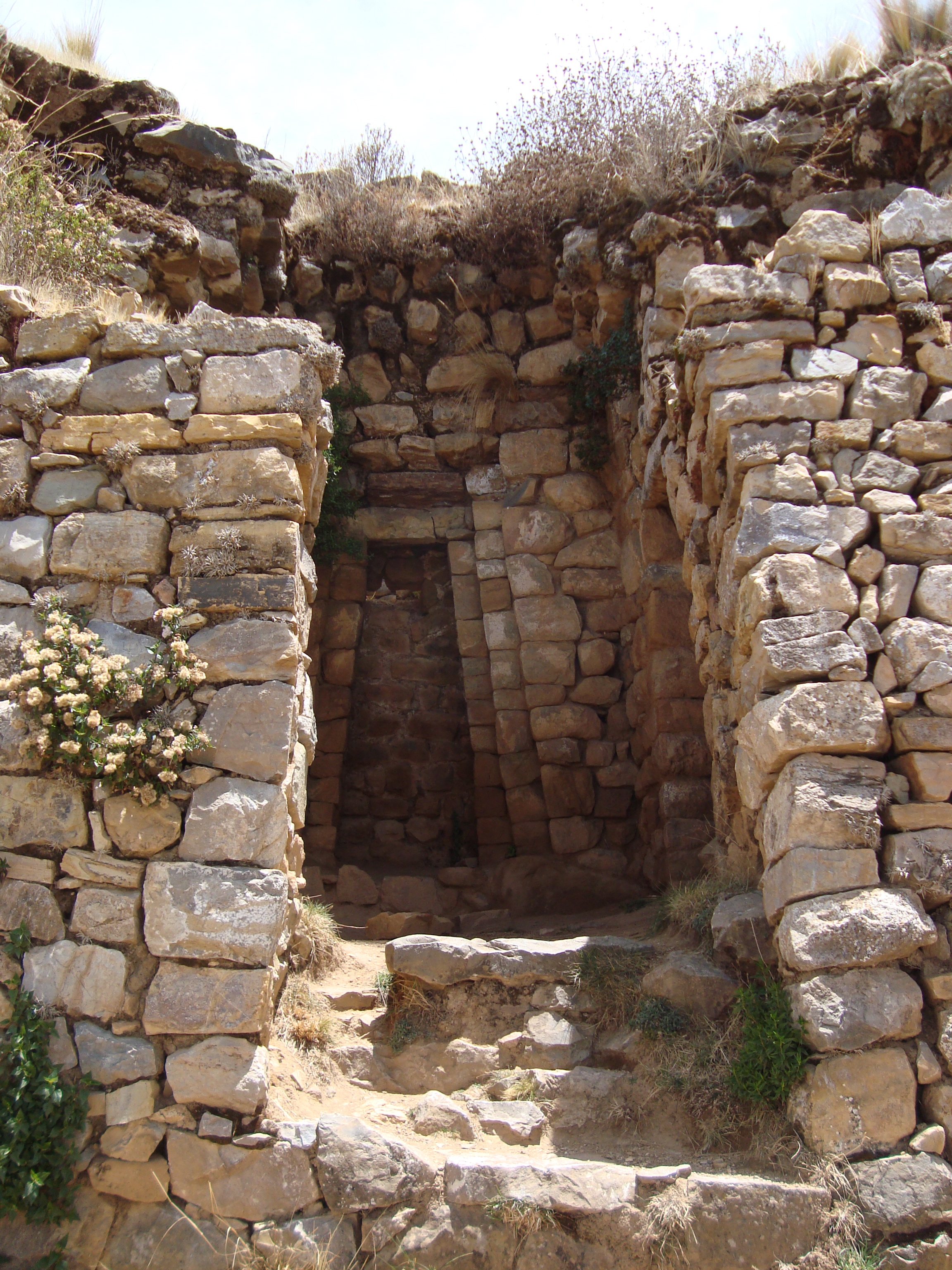
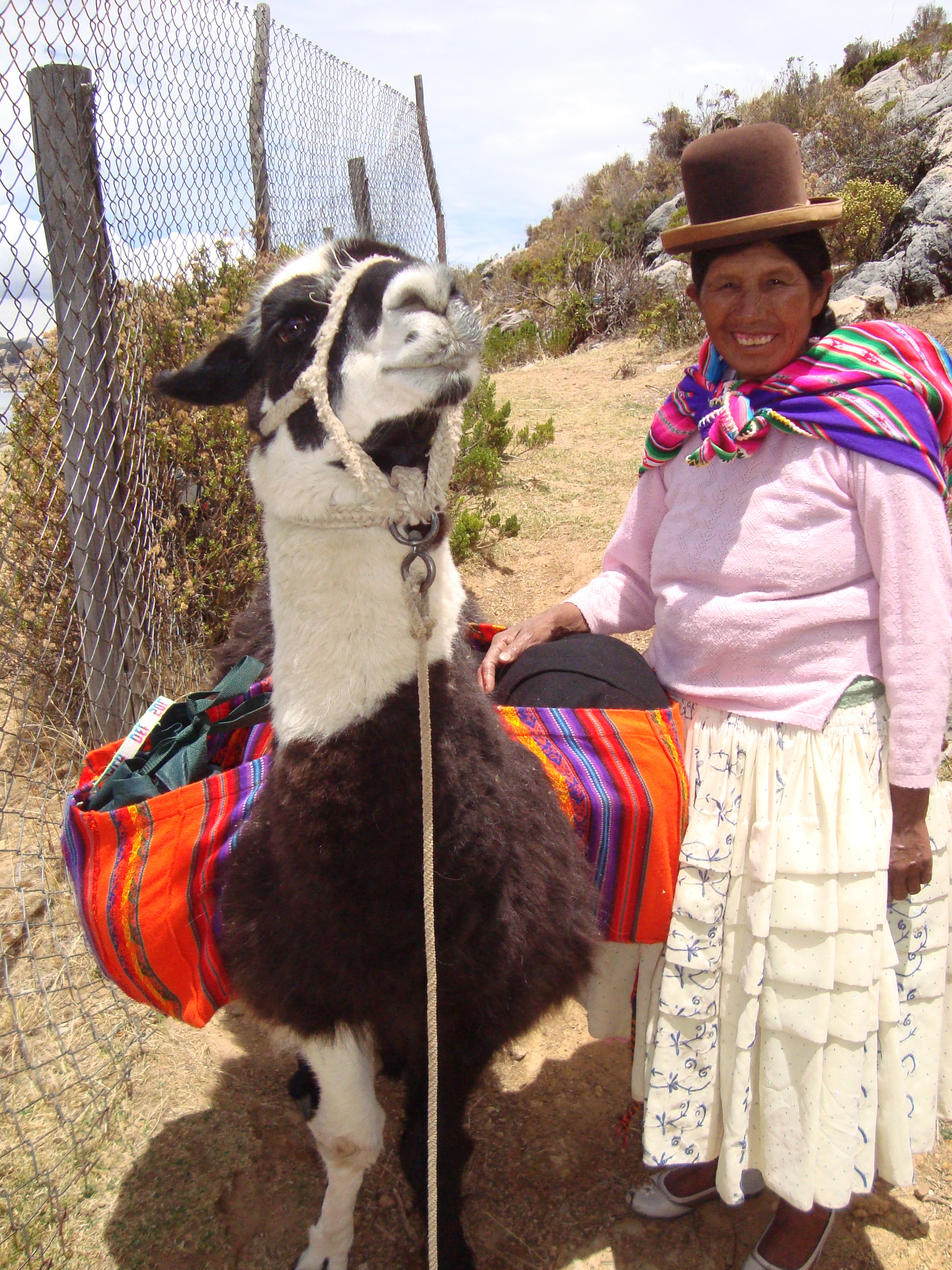
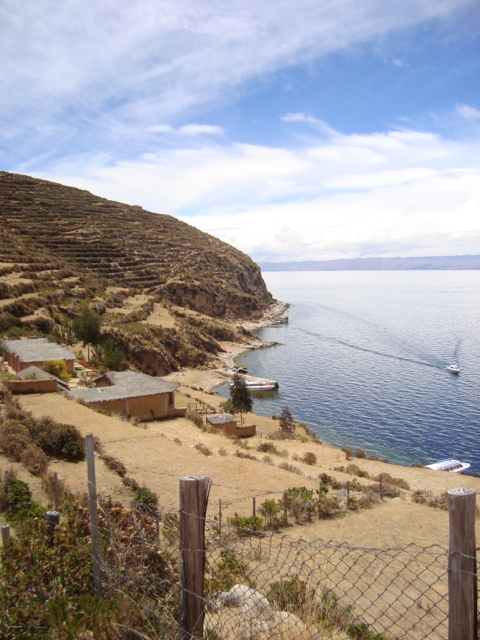
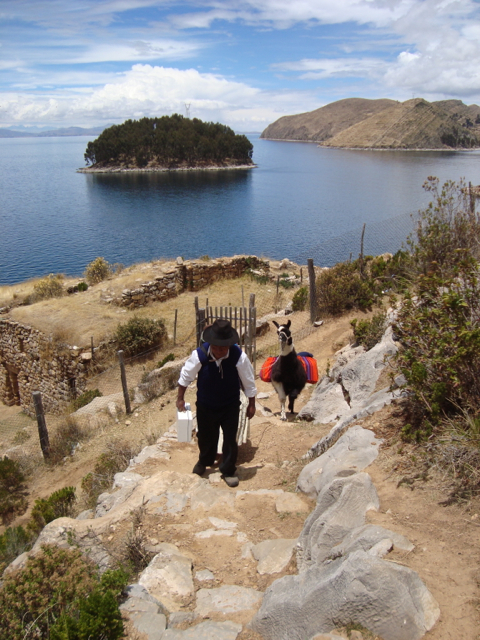
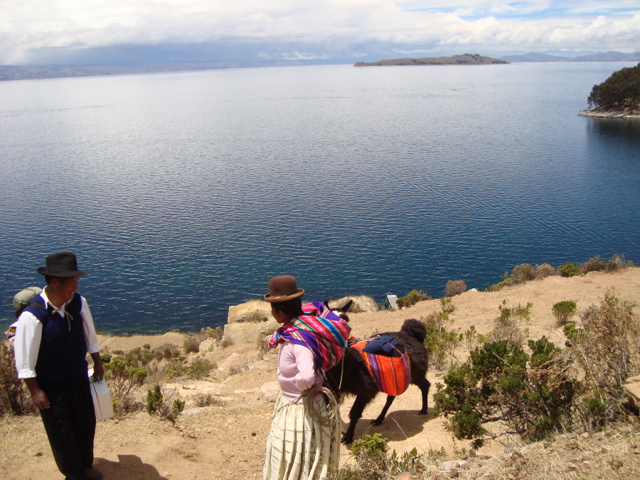
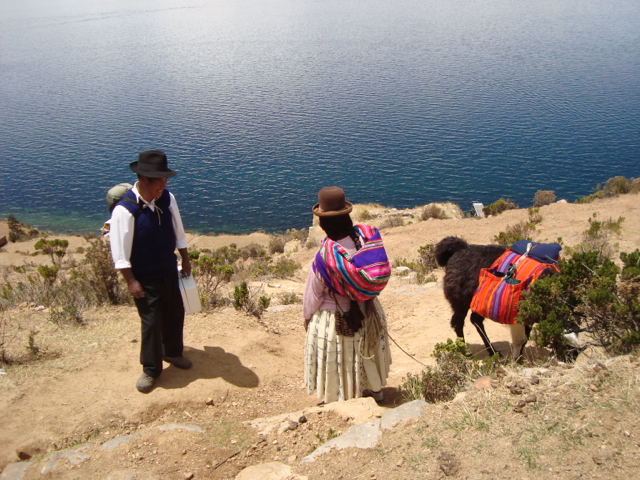
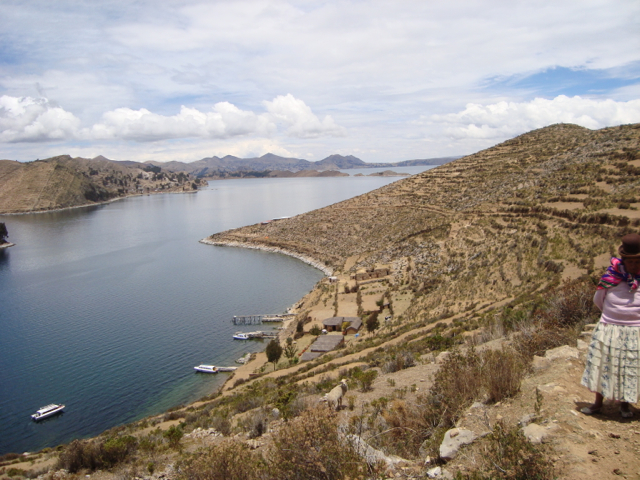
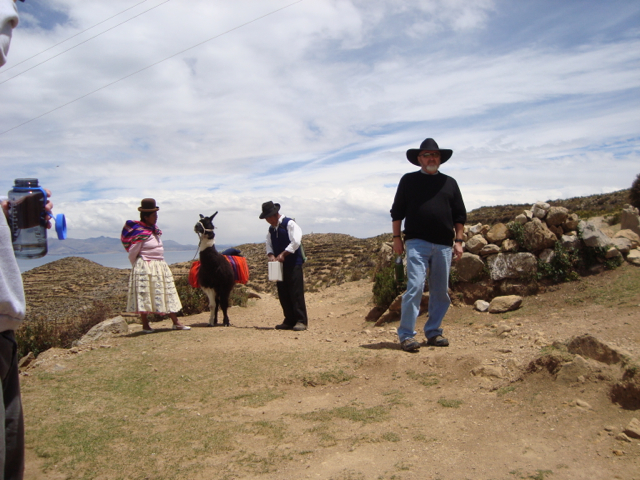
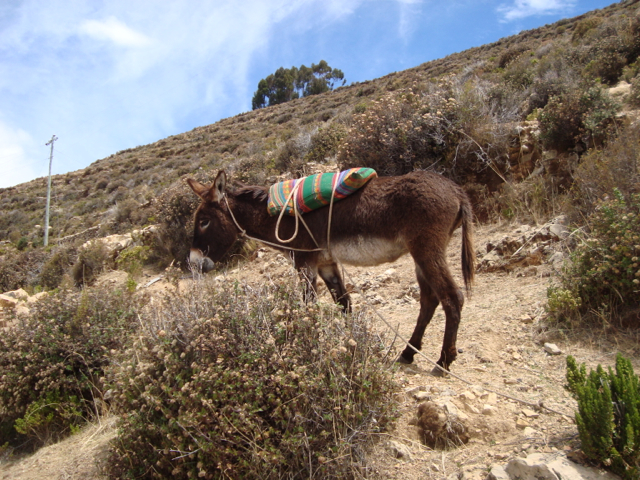
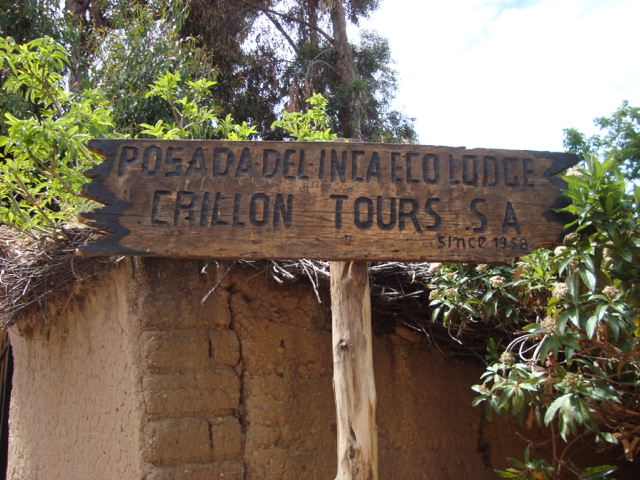
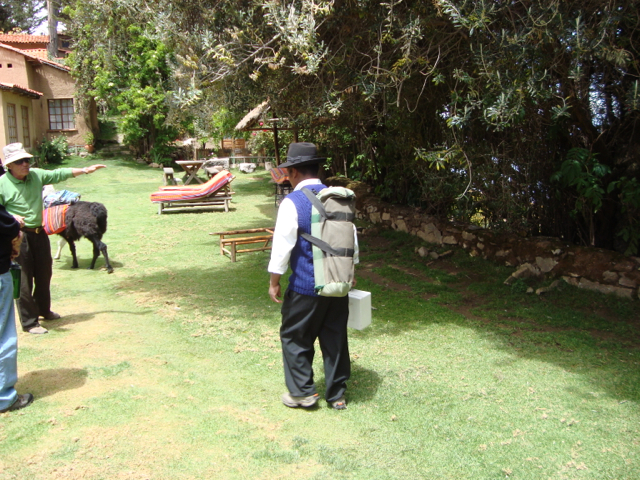
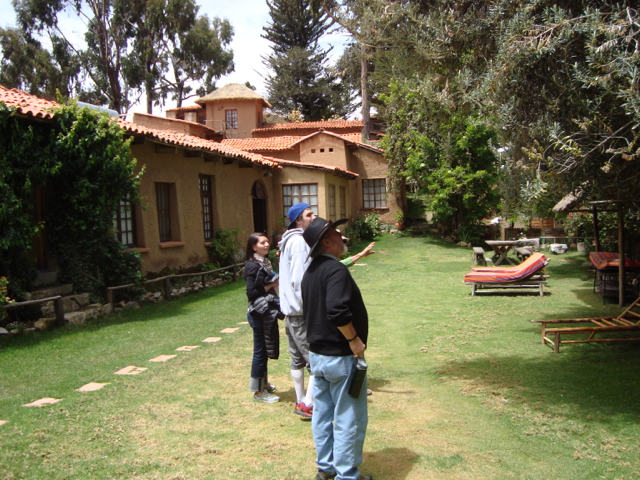
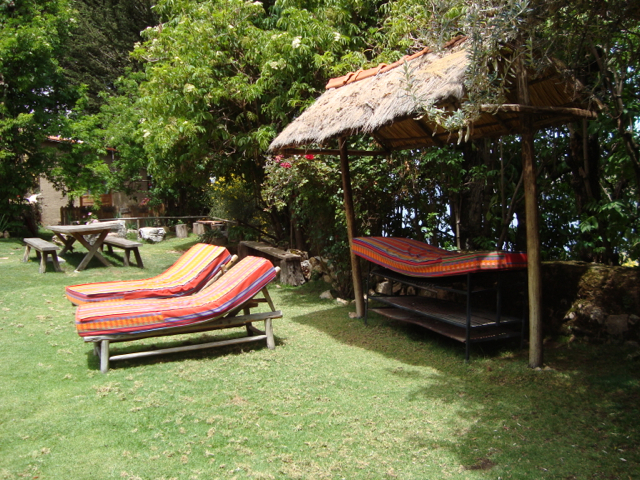
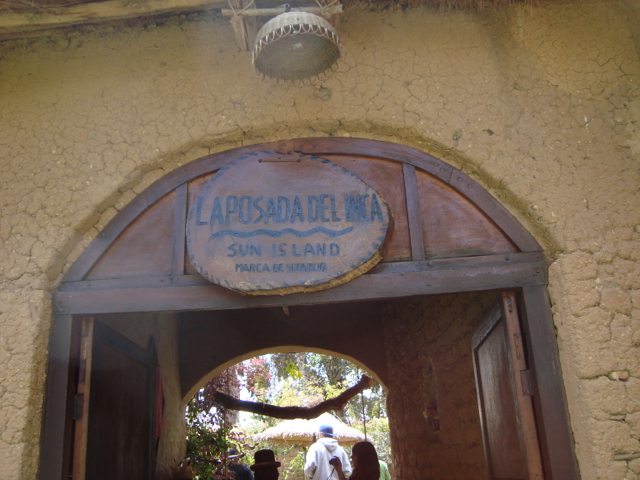
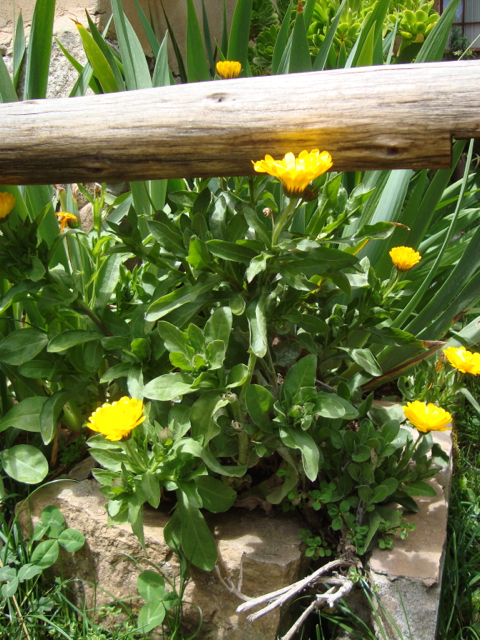
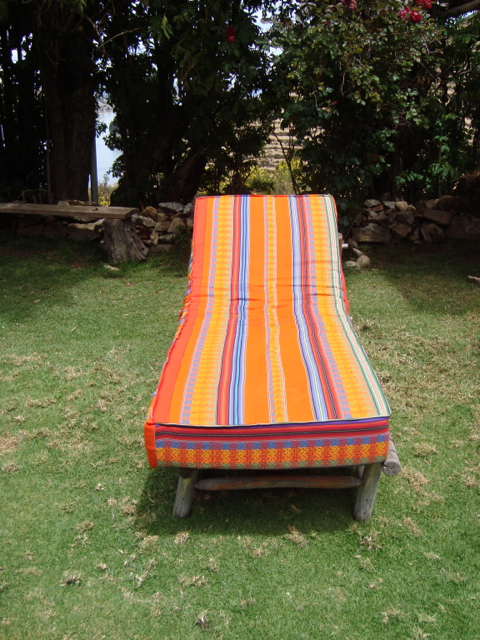
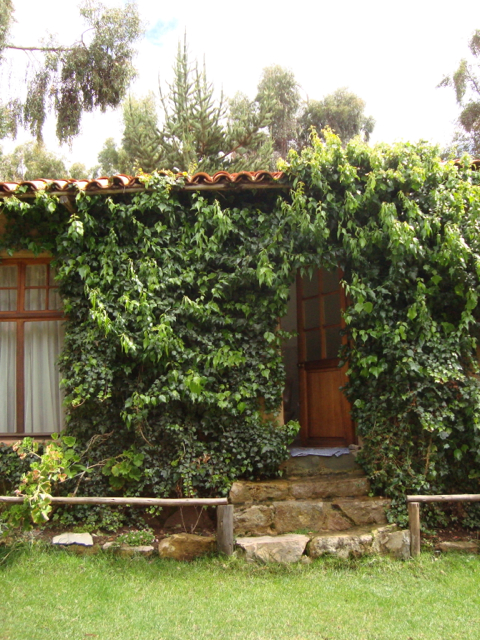
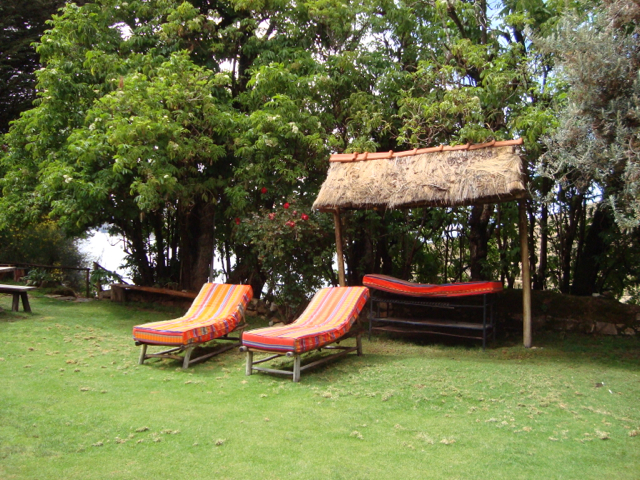
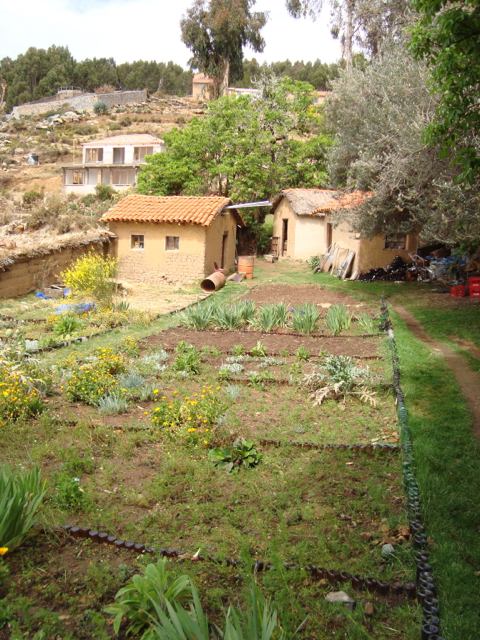
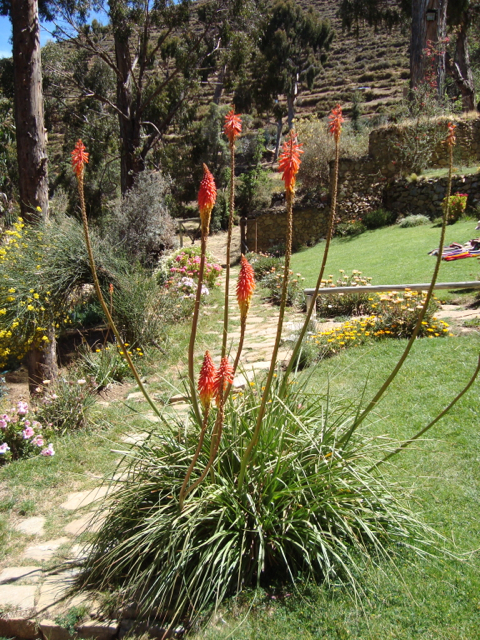
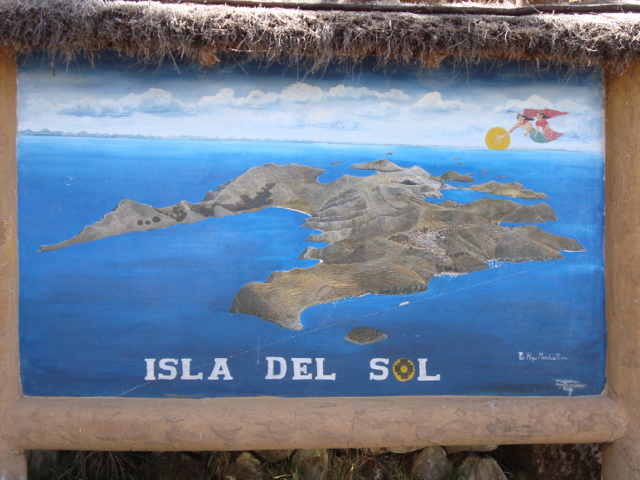
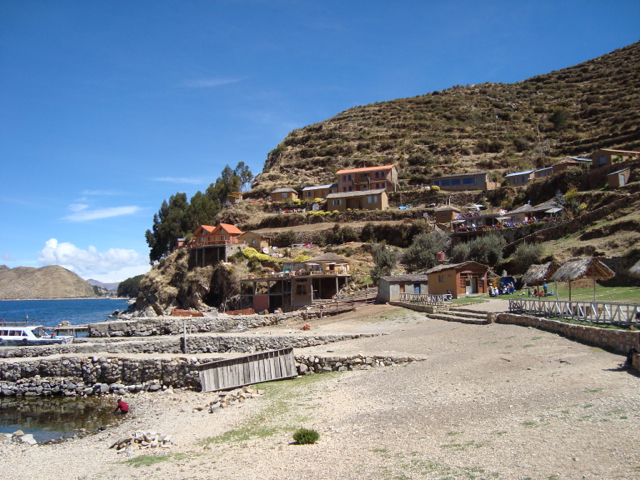
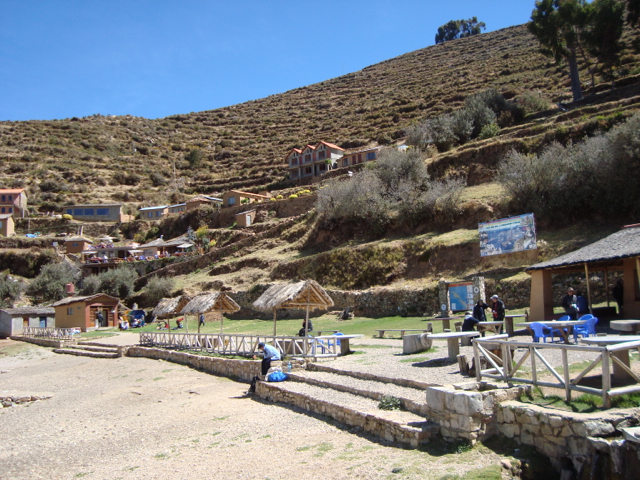
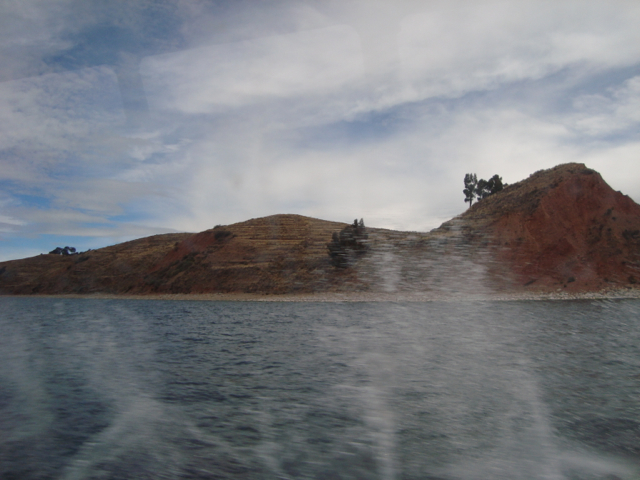
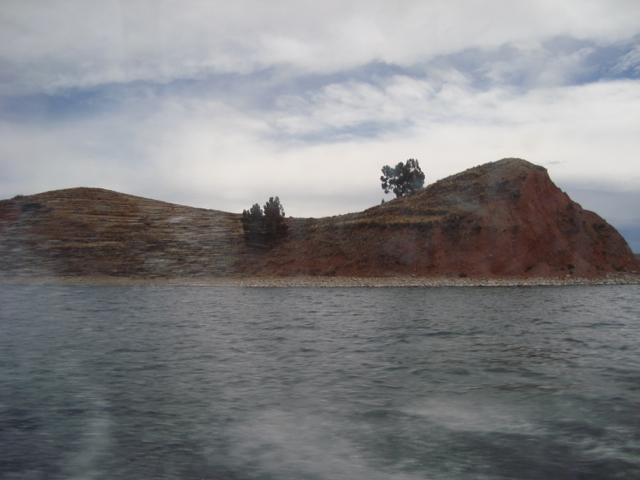
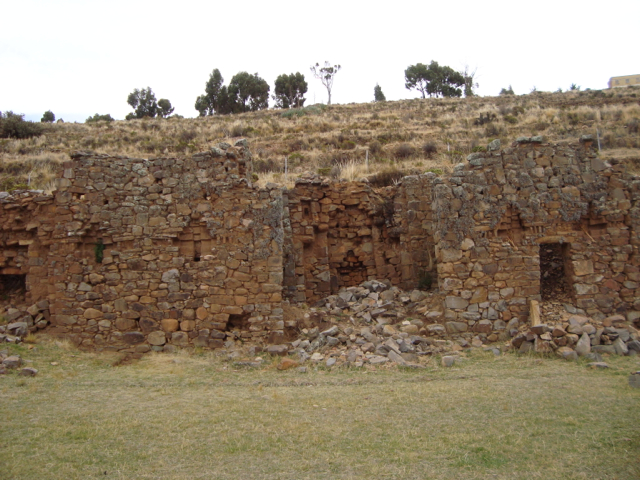
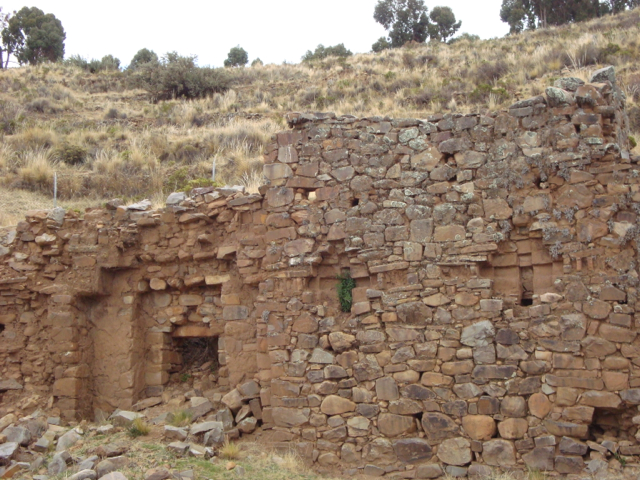
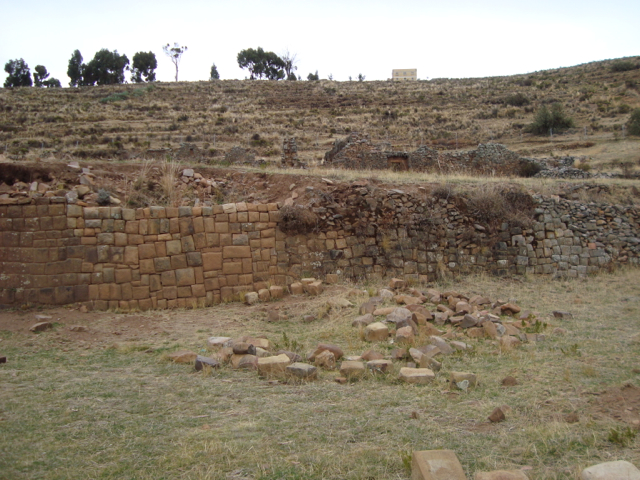
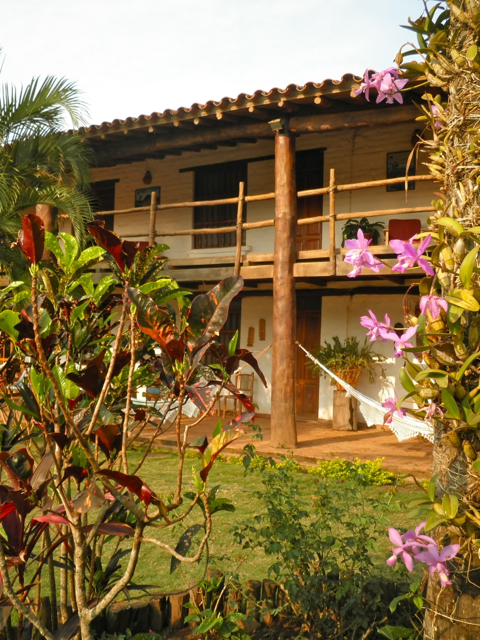
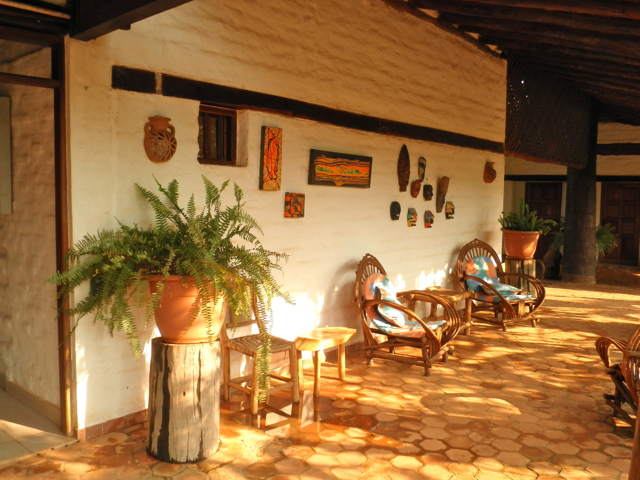
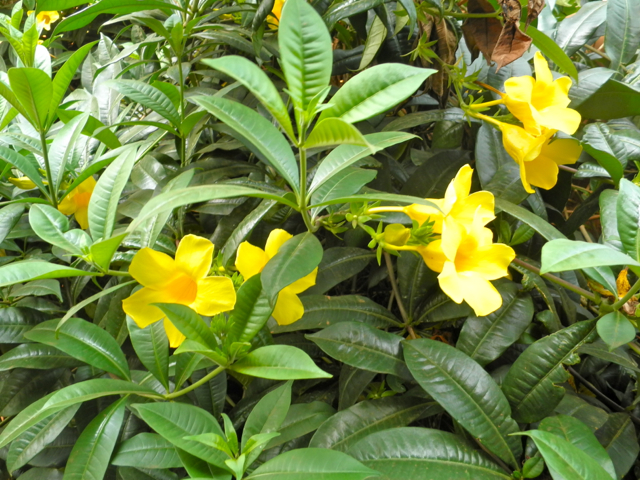
We continued on to Sun Island to visit the Pilcocaina Sun Temple/Ruins. Sun Island was originally called Rock of the Puma; eventually the entire Lake was referred to as Rock of the Puma (Titicaca). Next, we had a “short” although STEEP uphill trek to Posada del Inca for lunch and dinner and stay for the night; we were delighted to be accompanied by Martina, our pack llama to carry our daypacks. Posada del Sol is an amazing respite–about a half hour walk from the shore of Lake Titicaca traversing a very steep ascent–lots of stops to pause and look at the scenery and to tour pre-Inca temples turned into military lookouts by the Incas to control the traffic on the Lake. The flowers and foliage at Posada del Sol were incredible–roses, daisies, grenadine, geranium, pansies, and many more I don’t know the names. We were greeted by the friendly staff with a welcome cup of coca tea and then were taken to our rooms where we had delightful Andean carpets, beautiful, rustic wicker furniture, a modern bath, baseboard heat, and comfy twin beds with electric blankets. Shortly, we had a brief rest in the sun on delightfully covered lounge chairs, and then it was time for lunch in the dining room. In the afternoon we had a most enjoyable siesta and then at 5:30 gathered for a walk up the “hill” to watch the sunset. After watching the donkeys and sheep come home herded by young children, older women, and young men, we passed many pizza restaurants and backpacker bed and breakfasts. We paused for a photo op at the 4,000-meter mark.

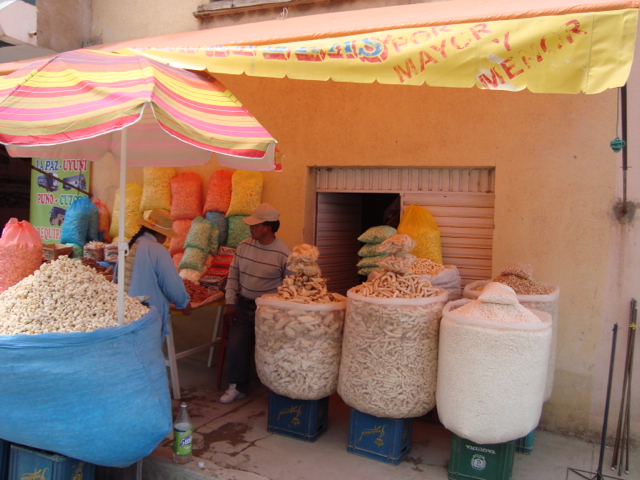
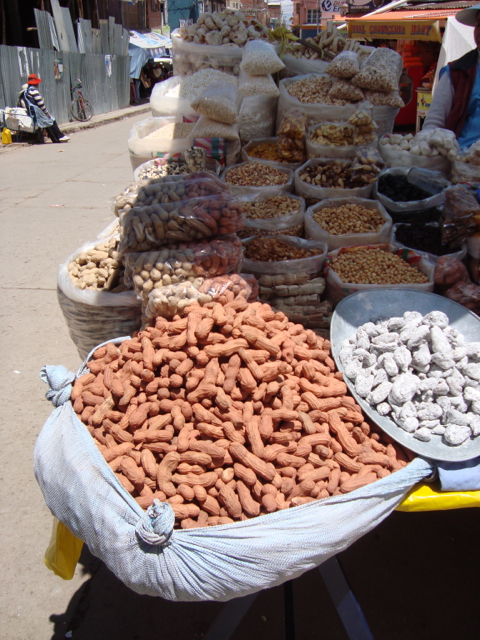
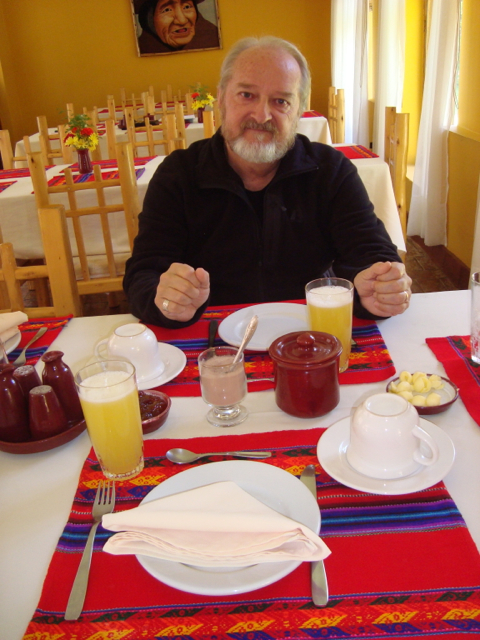
Then we walked slowly up to the top of the point where there was a lighthouse to watch the beautiful, changing colors of the sunset. From our high point we could see a 360-degree view. It was amazing watching the lights come on in Peru as we stood on our lookout perch in Bolivia–an amazing experience. The walk back to our hotel was a bit treacherous walking downhill without the light of the sun; however, breathing was SO much better. Antonio, Margaret, Danny, Ernie, and I shared a beautiful bottle of Monet wine in front of a toasty fire in the quaint little lounge before dinner, which consuming our peanuts and popcorn purchased at the Copacabana market. Juan Antonio surely has traveled a lot and shared so much information with us the entire day. After another tasty meal in the dining room, we all retired for the evening to rest, while listening to a gentle rain fall most of the night.
October 9, 2011
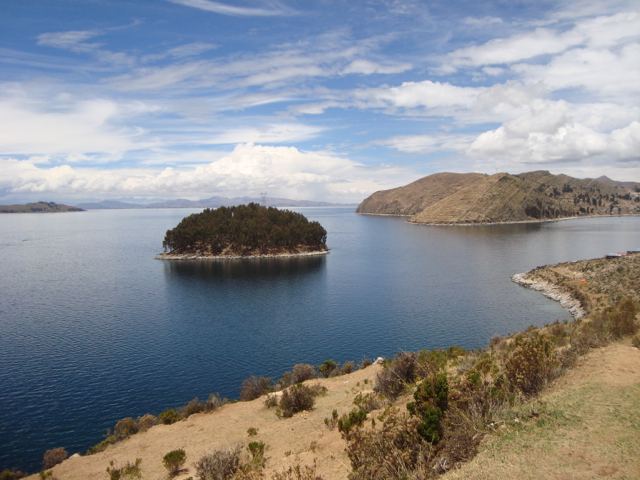
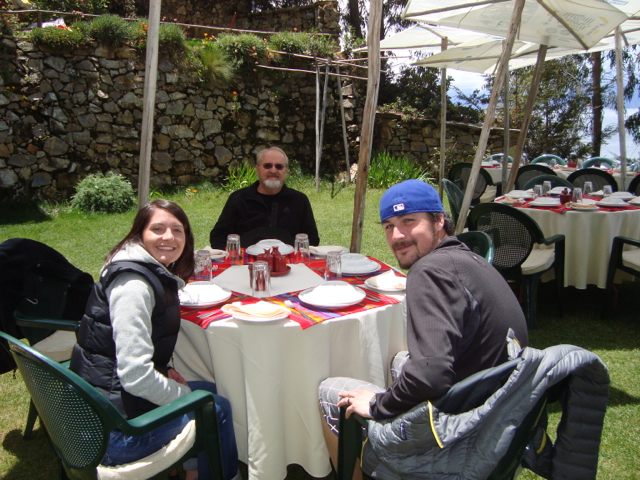
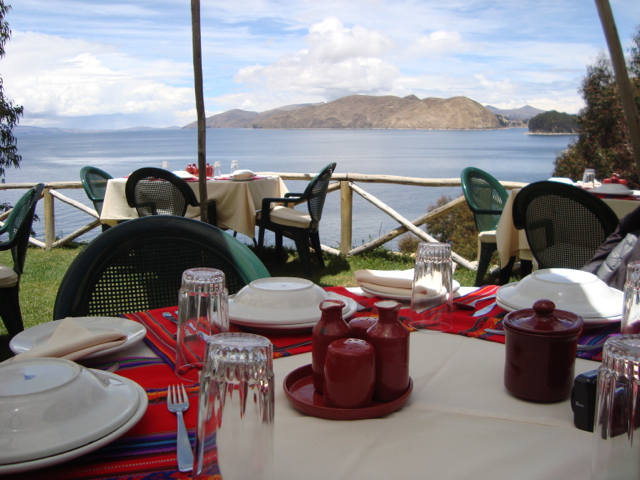
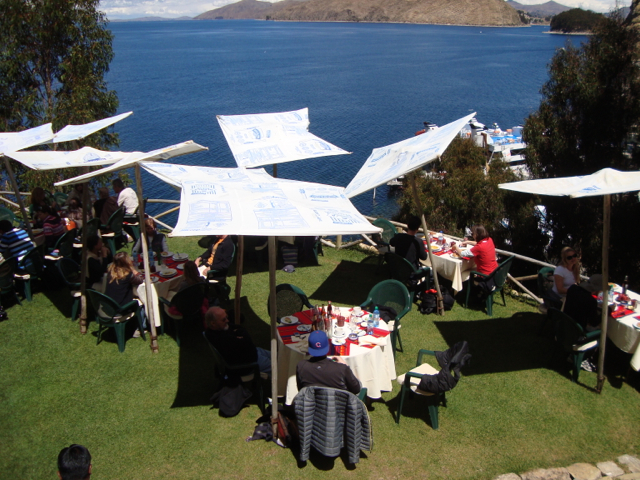
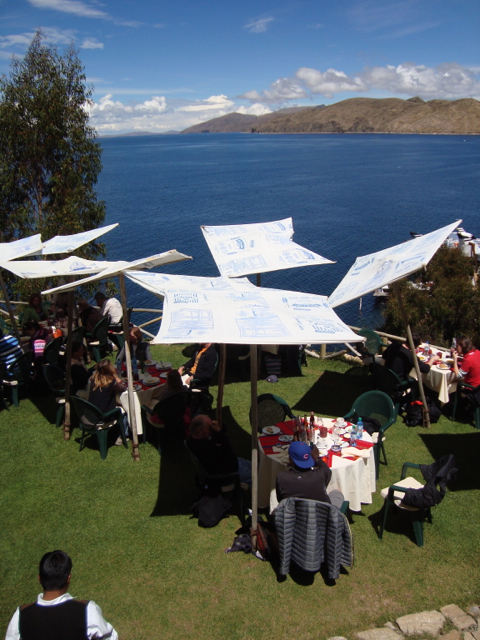
Today is a beautiful sunny day with an incredibly blue sky. Antonio says it’s the first day of spring– now it’s really arrived. After breakfast and a leisurely morning, we packed up our bags and hiked down the hill heading towards a great lunch at Uma Kullo Restaurant (trout from the Lake). Uma Kullo is an authentic Inca terrace overlooking the sapphire-blue waters of Lake Titicaca. Notice the flour sack cloth made into umbrellas at the restaurant!
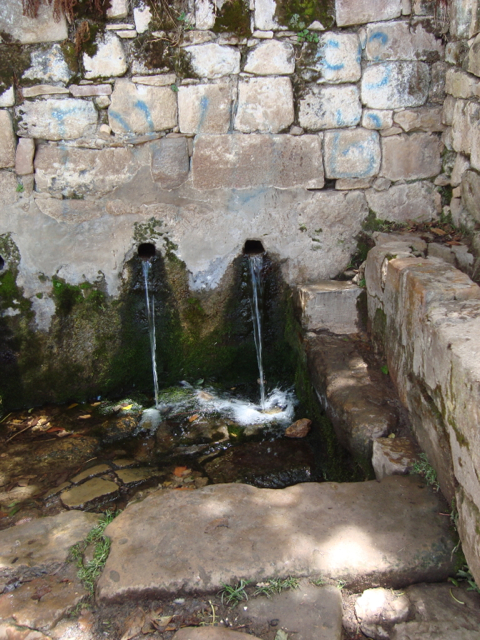
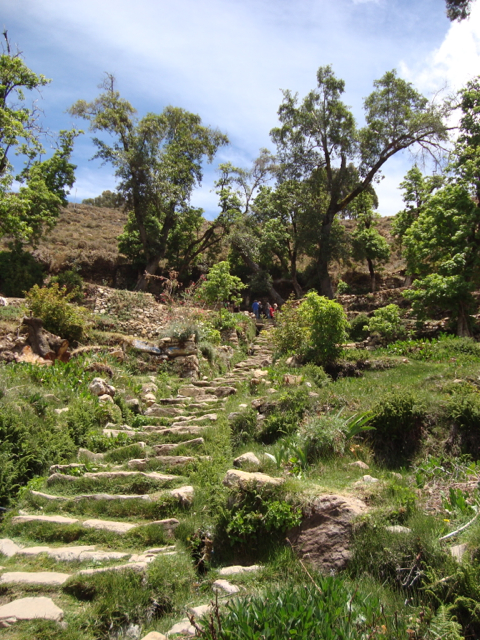
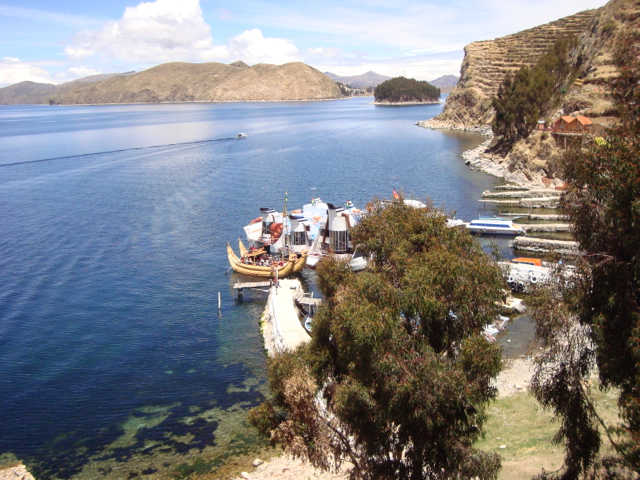
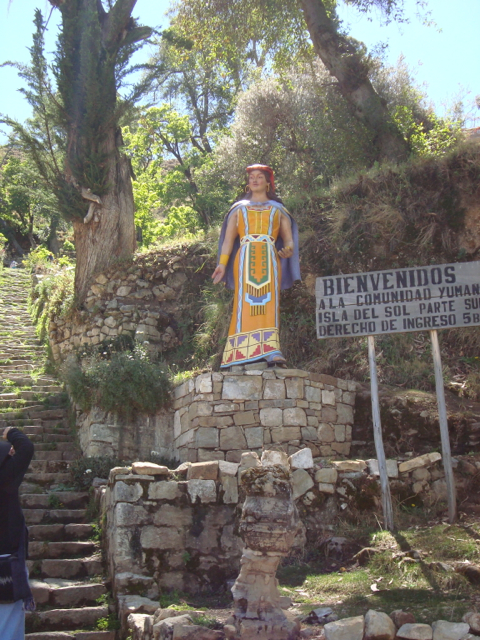
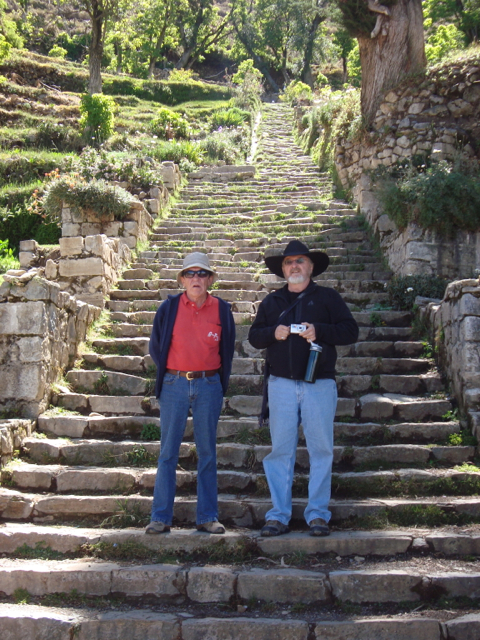
We traveled down the Inca Staircase, built by the Inca to reach the Sacred Fountain. A drink from the fountain gives one eternal youth and happiness. Of course we had a drink! We also learned about island being the birthplace of the Sun and it was here that Father Sun summoned Manco Kapac and Mama Ocllo to gather natives to teach them the art of civilization—thus the Inca Empire was born.
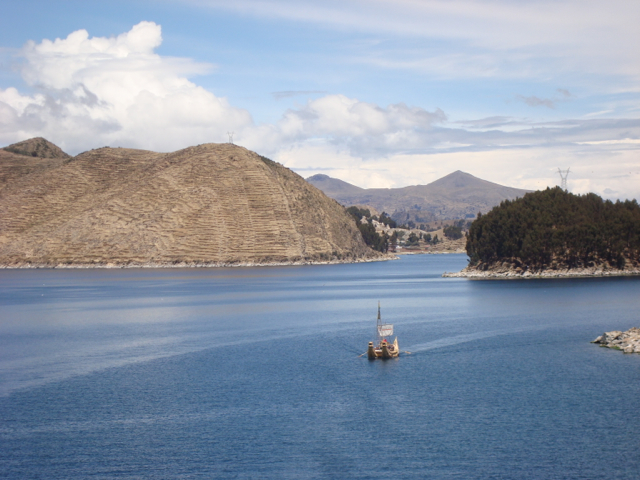
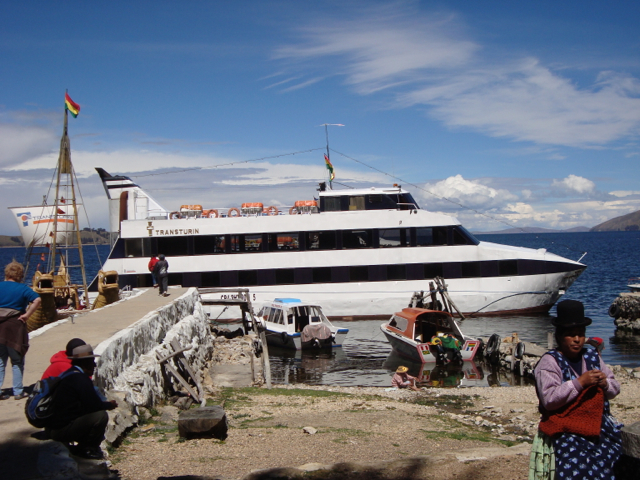
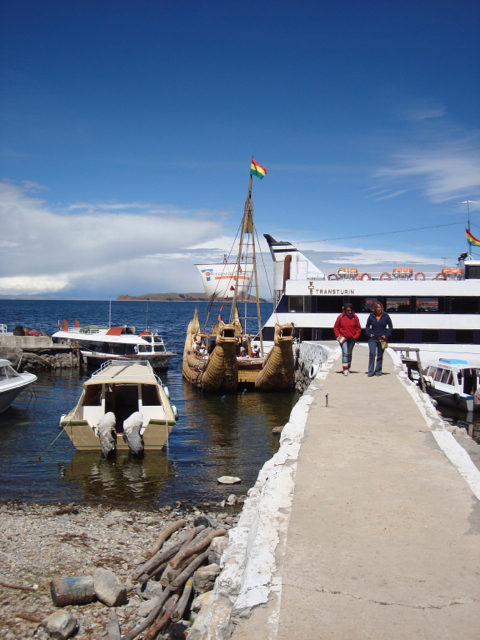
Afterwards, we boarded the hydrofoil (a different boat) and traveled towards Moon Island. I feel a little better about being on the water since our last experience in February when we crossed the Mediterranean Sea to escape from Libya! At least today the sun is shining brightly and when we first took off, the lake was like glass. After traveling for a while, the water became a bit more turbulent, but not bad. We look forward to the activities for the rest of the day and tasting more Lake trout this evening at our candlelight dinner (Danny and Ernie had llama). I can’t say enough regarding the beautiful weather–never thought it would be this warm at such a high altitude. Having a little difficulty with déjà vu remembering the ferry ride, but trying to look at the land all around rather than the waves and water.
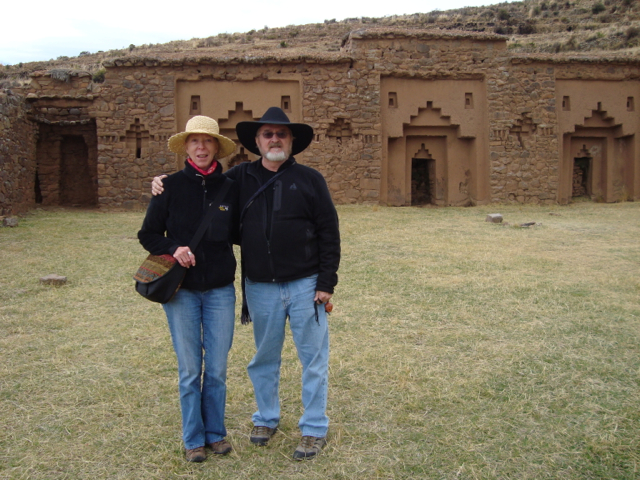
Moon Island is home of the Sun Virgins Temple—Iñak Uyu. This temple is one of the most important ruins on the lake. We only had thirty minutes at this stop—then back on the hydrofoil to head to Huatajata.
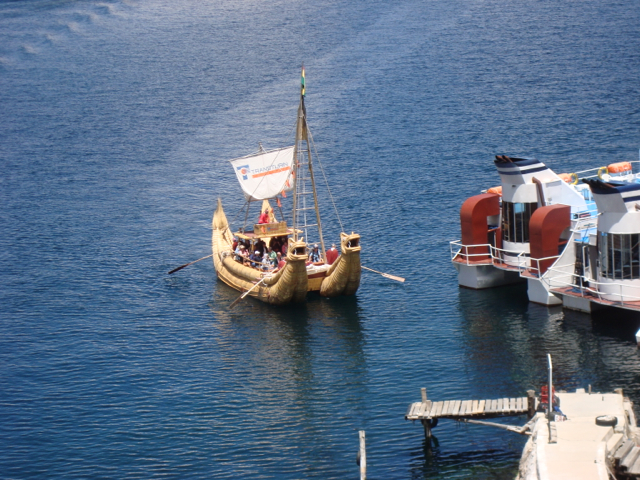
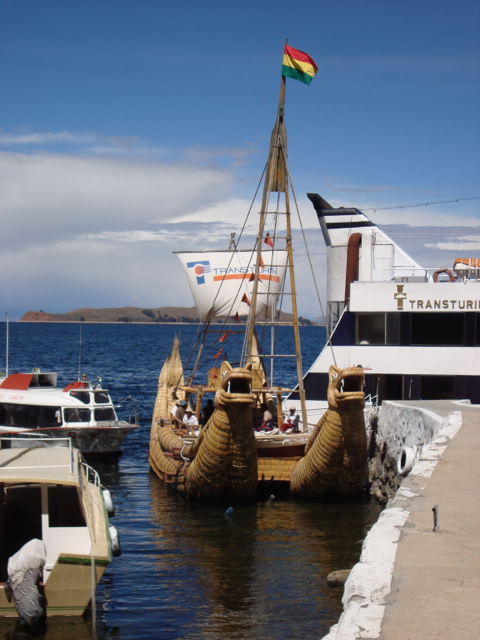
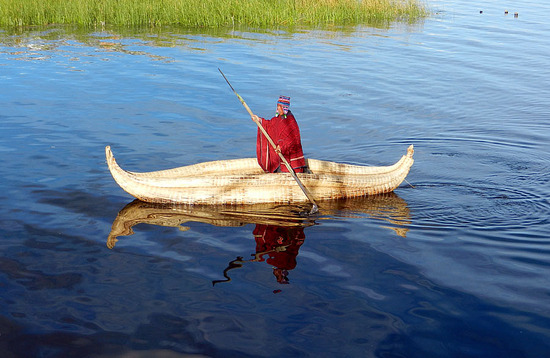
The image above was taken from a website (http://blog.travelpod.com) as I didn’t get a picture of the man in the reed boat when we arrived in our hydrofoil, but we saw the same man.
Upon arrival at Huatajata once again, we were escorted to our rooms at Hotel Inca Utama. Soon we were listening/watching “The Mystic World of the Kallawaya”
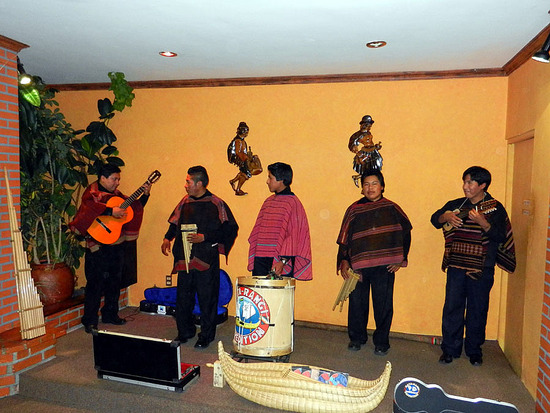
prior to visiting the Andean Roots Eco Village and had a special session with a shaman, Tata Benjo, a Kallawaya, who casted coca tea leaves to answer our questions. Kallawayas are natural healers of Bolivia who are authorized by law to practice natural medicine. From the medicinal herb/flower/plant exhibit, I learned why I’m craving mustard on everything—it’s good for your respiratory system! Soon we were whisked to the dining room for a much enjoyed candlelight dinner with entertainment by an Andean local band—they had SO much energy!
I copied this photo as well, as I didn’t have my camera at dinner (http://blog.travelpod.com).
Antonio treated us all with a gift of a tiny cup of hot mulled, spiced wine—we kept the souvenir terracotta cups. I’m sure we all slept well our second night after so much fresh air, sun, and high altitude!
October 10, 2011
On Monday, Columbus Day, our final morning found us visiting the Altiplano Museum with an excellent audio-guided tour in English where we heard the history and heritage of the Aymaras and the Incas, a bit about the colonial times of Bolivia, and the Jacques Cousteau Expedition to Lake Titicaca—all very nicely labeled in English. Last night we missed a chance to go into the Native Observatory “Alajpacha” to learn about and view the southern constellations through a NASA telescope—too cloudy. We look forward to participating in this experience on our next trip.
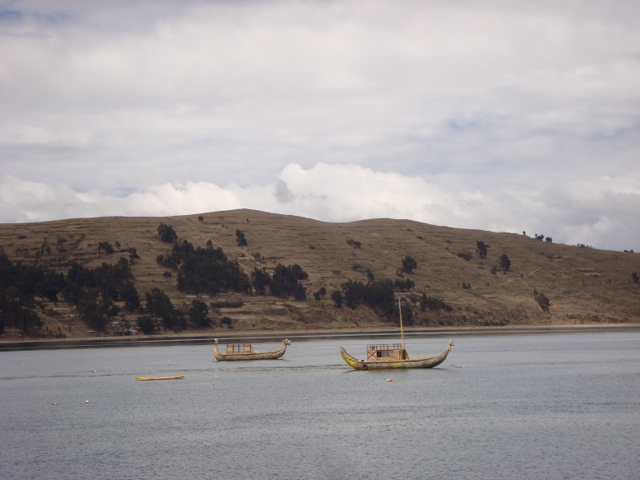
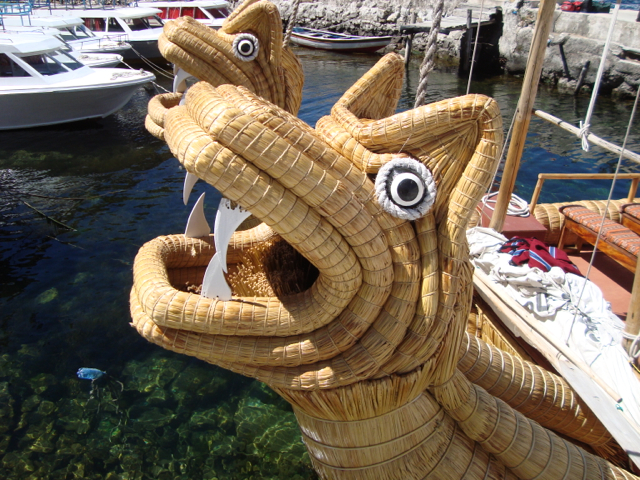
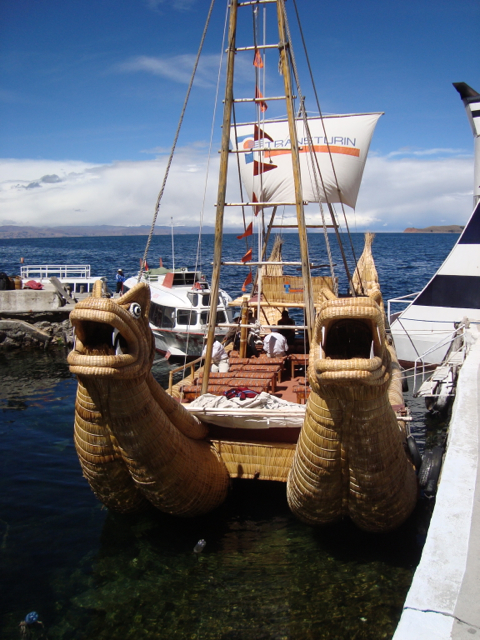
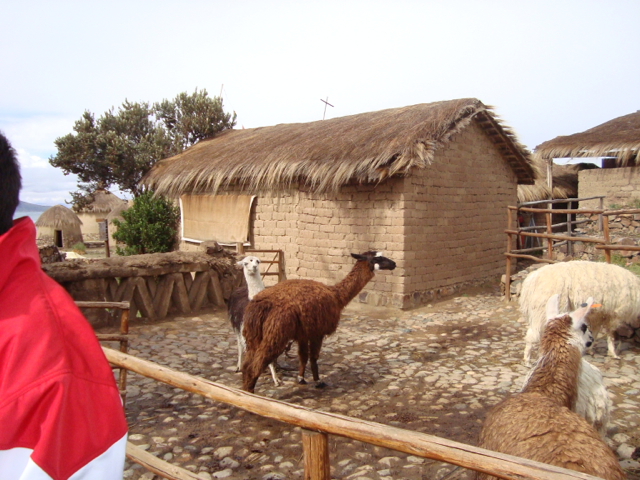
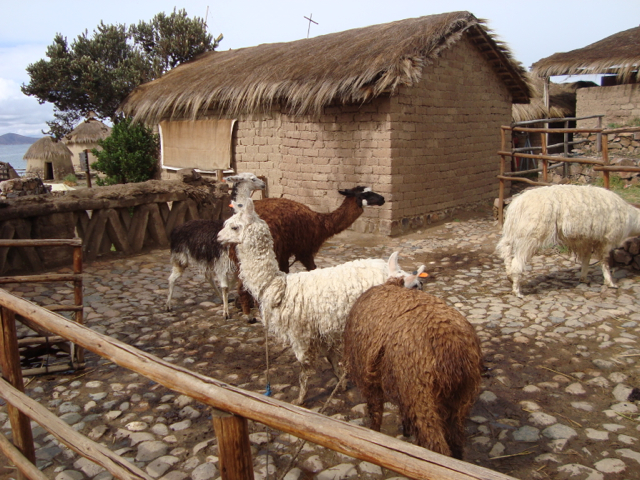
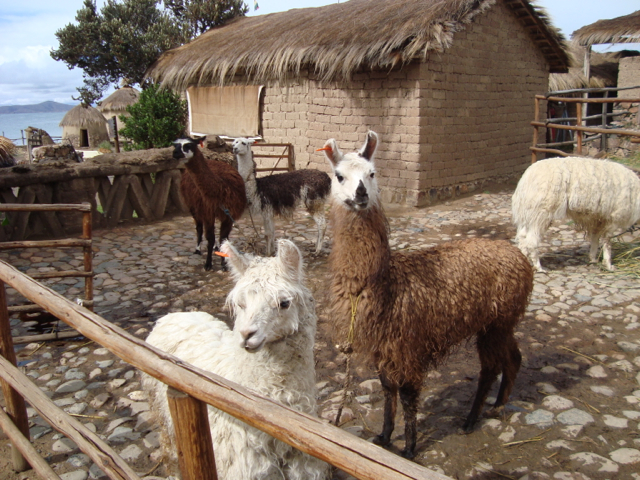
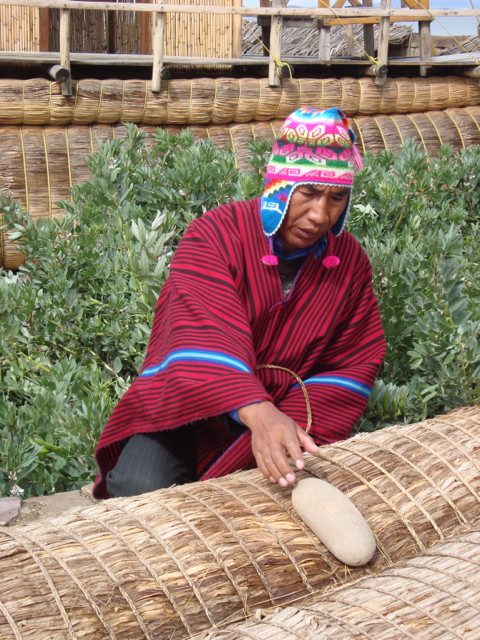
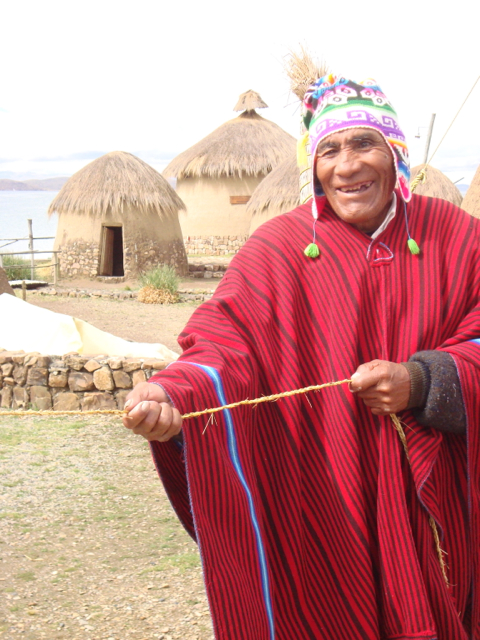
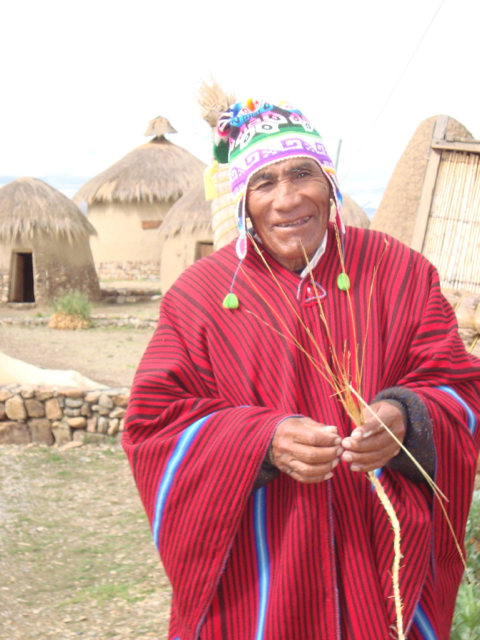
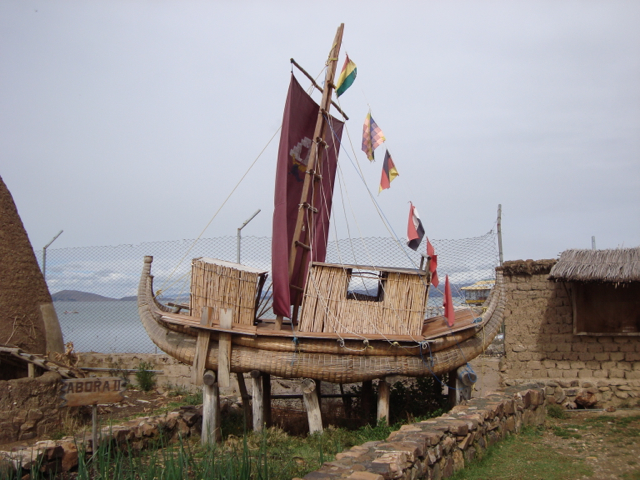
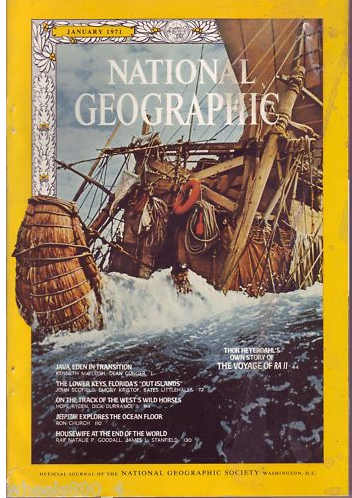
We also visited the Handicraft/Fisherman villages, the Mud Igloos of the Urus Chipayas, and most exciting to me—we met the Limachi brothers, who are the builders of the RA II and Tigris for Thor Heyerdhal epic expeditions across the Atlantic and more.
I found their stories incredibly fascinating and will be looking for the National Geographic January 1971 edition when we get home next summer, which tells about the expedition of RA II.
Source: http://www.nationalgeographic.com/
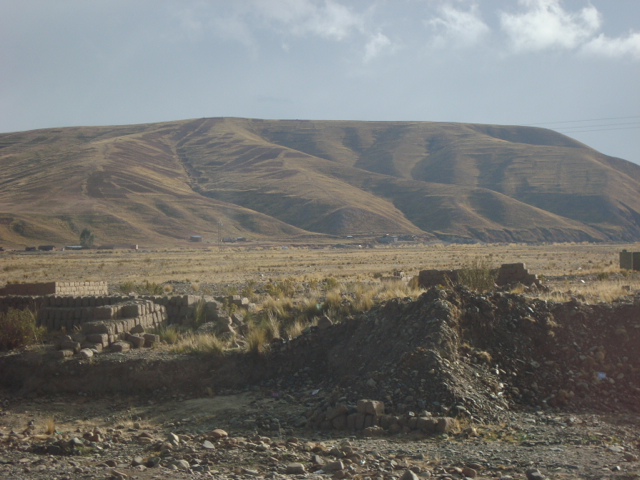
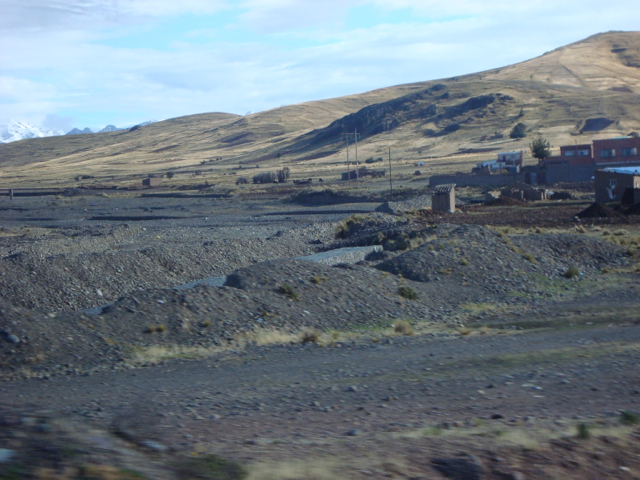
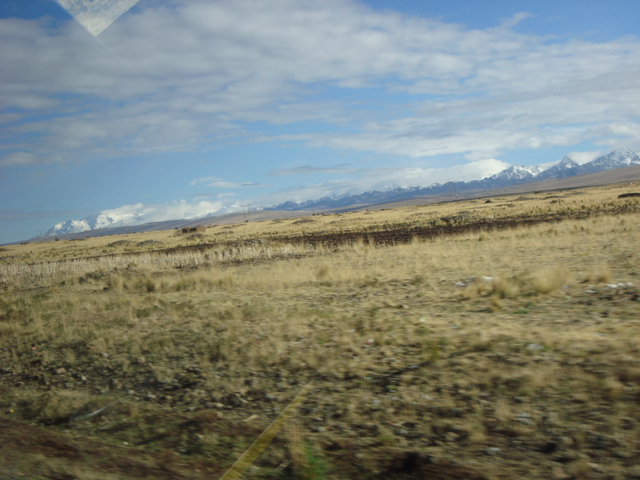
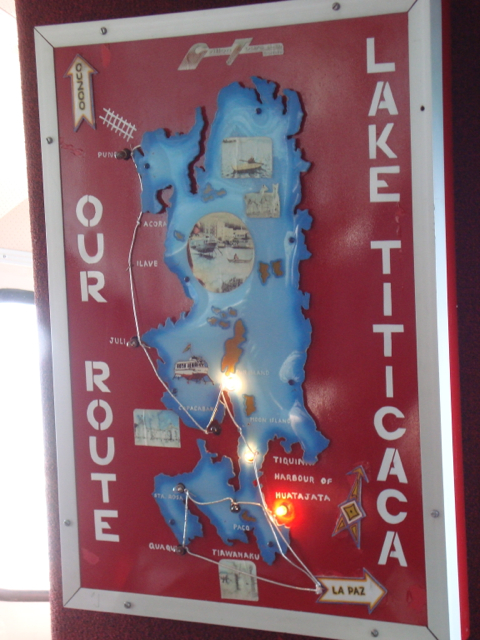
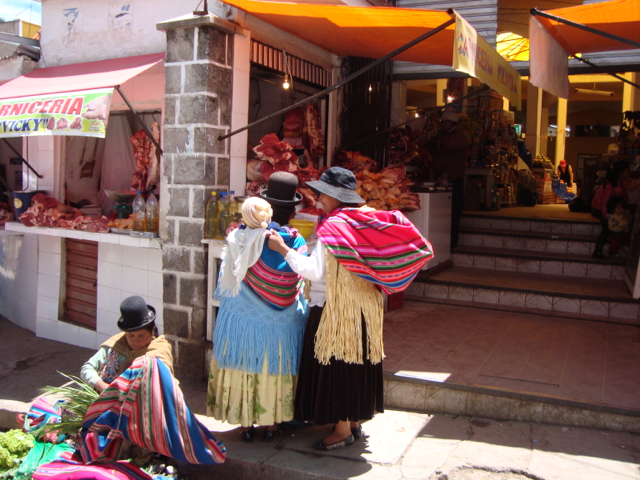
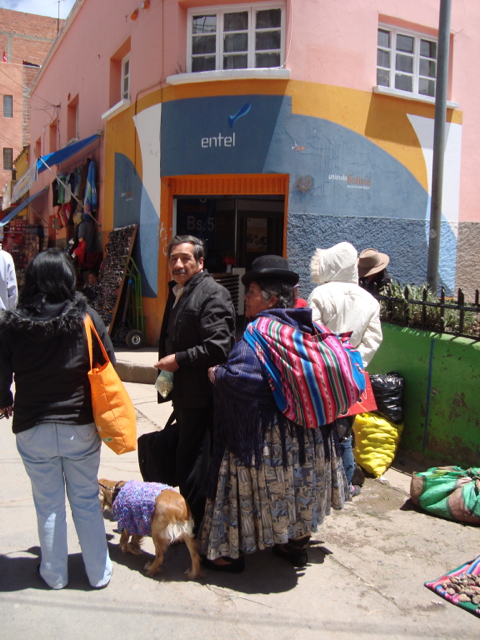
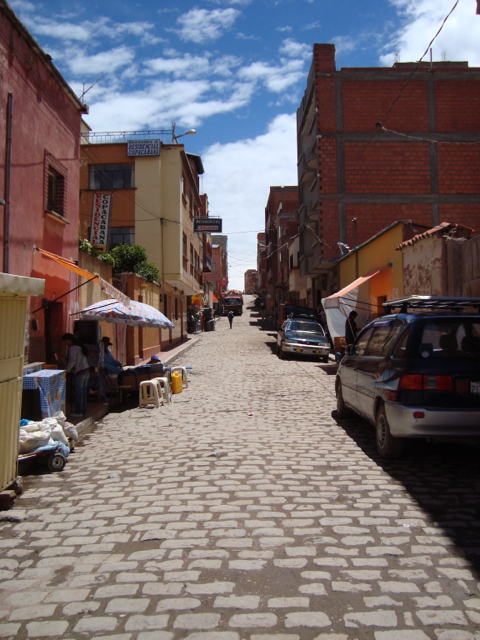
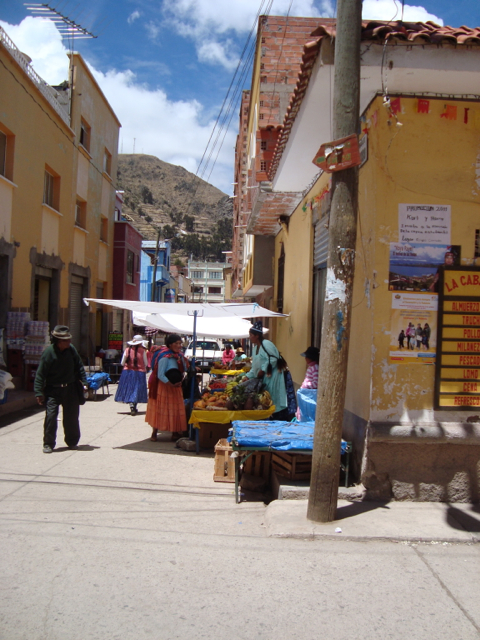
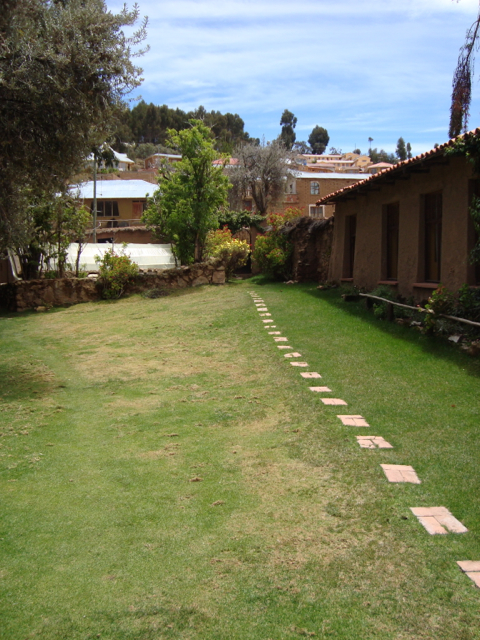
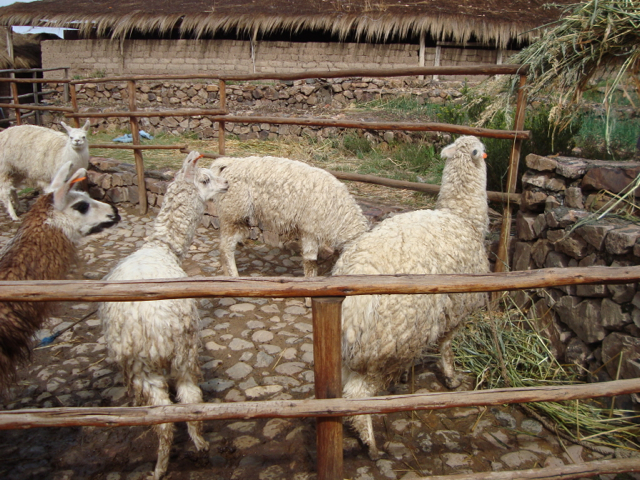
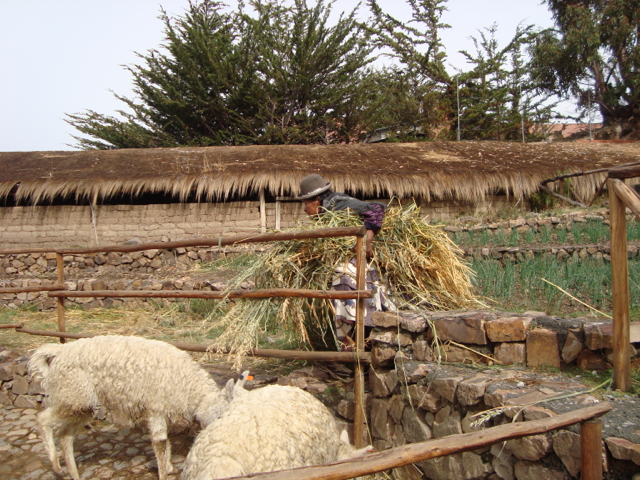
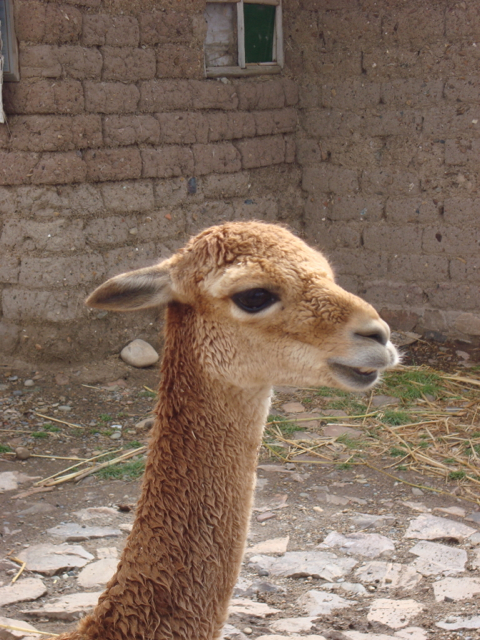
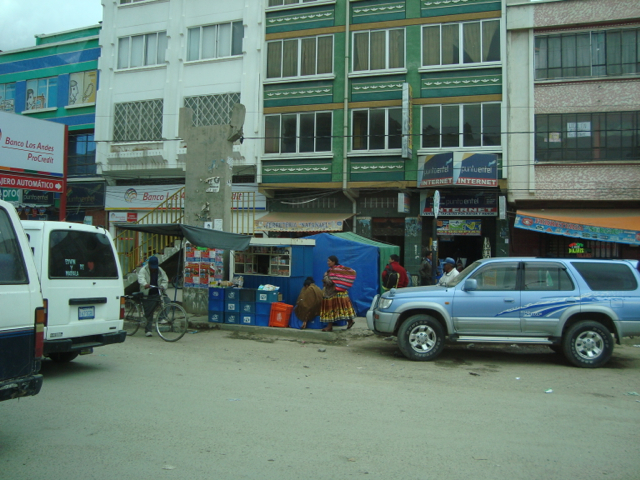
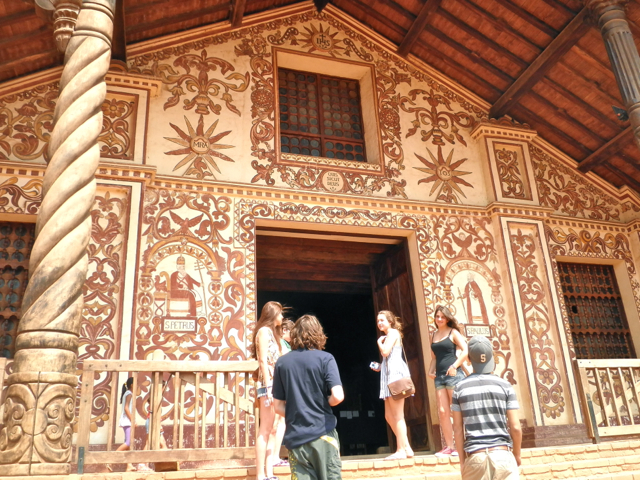
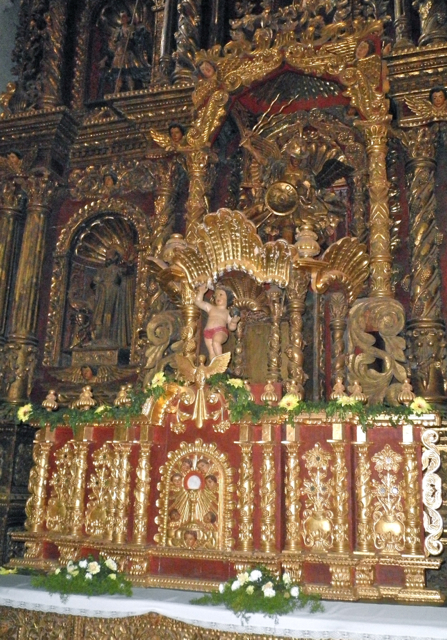
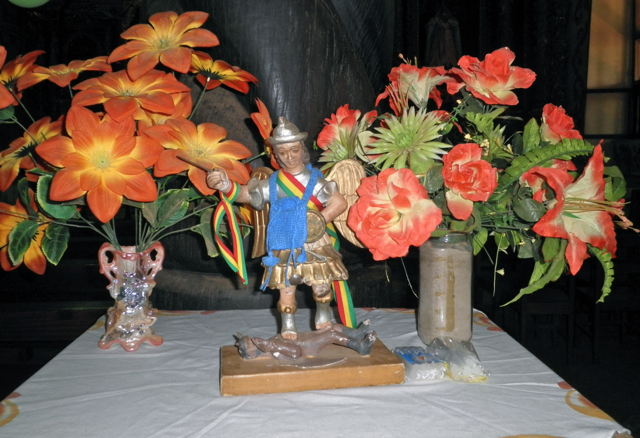
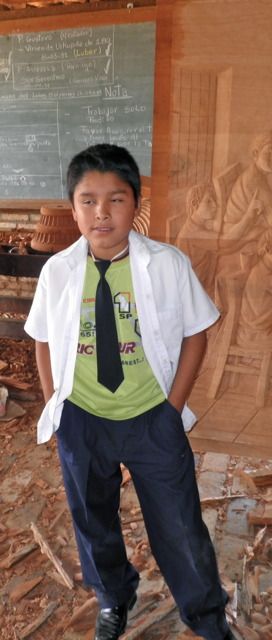
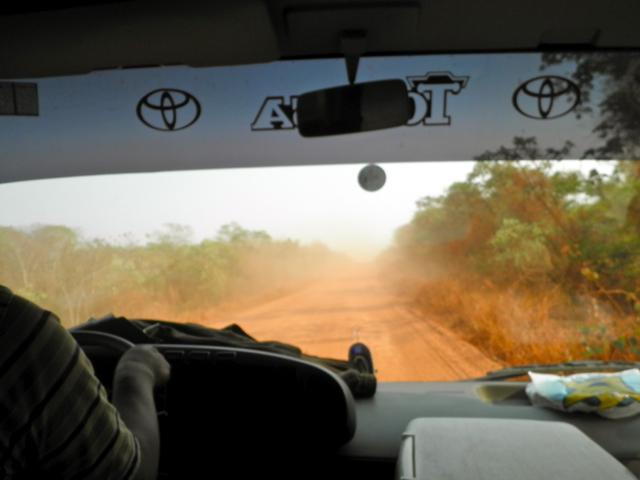
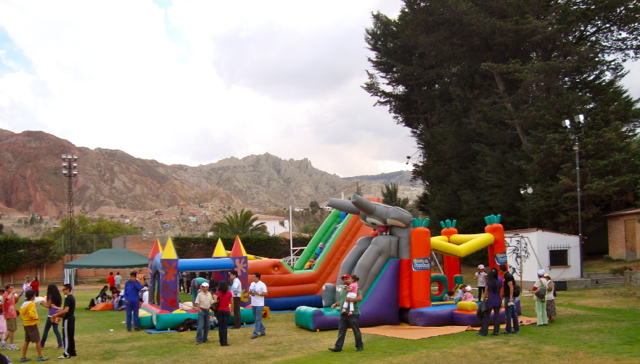
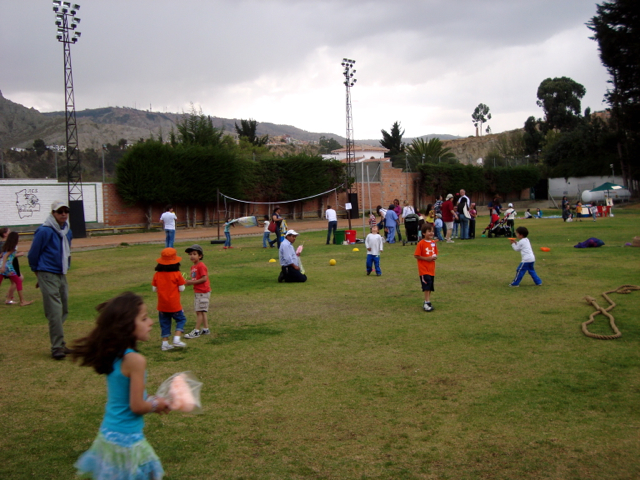
These last photos were taken again on the outskirts and in the Altiplano. We all look forward to more adventure in Bolivia. We were all delighted to be able to travel out of La Paz and see more of Bolivia at a very relaxed pace!






































































































 Travels with Beej and E